

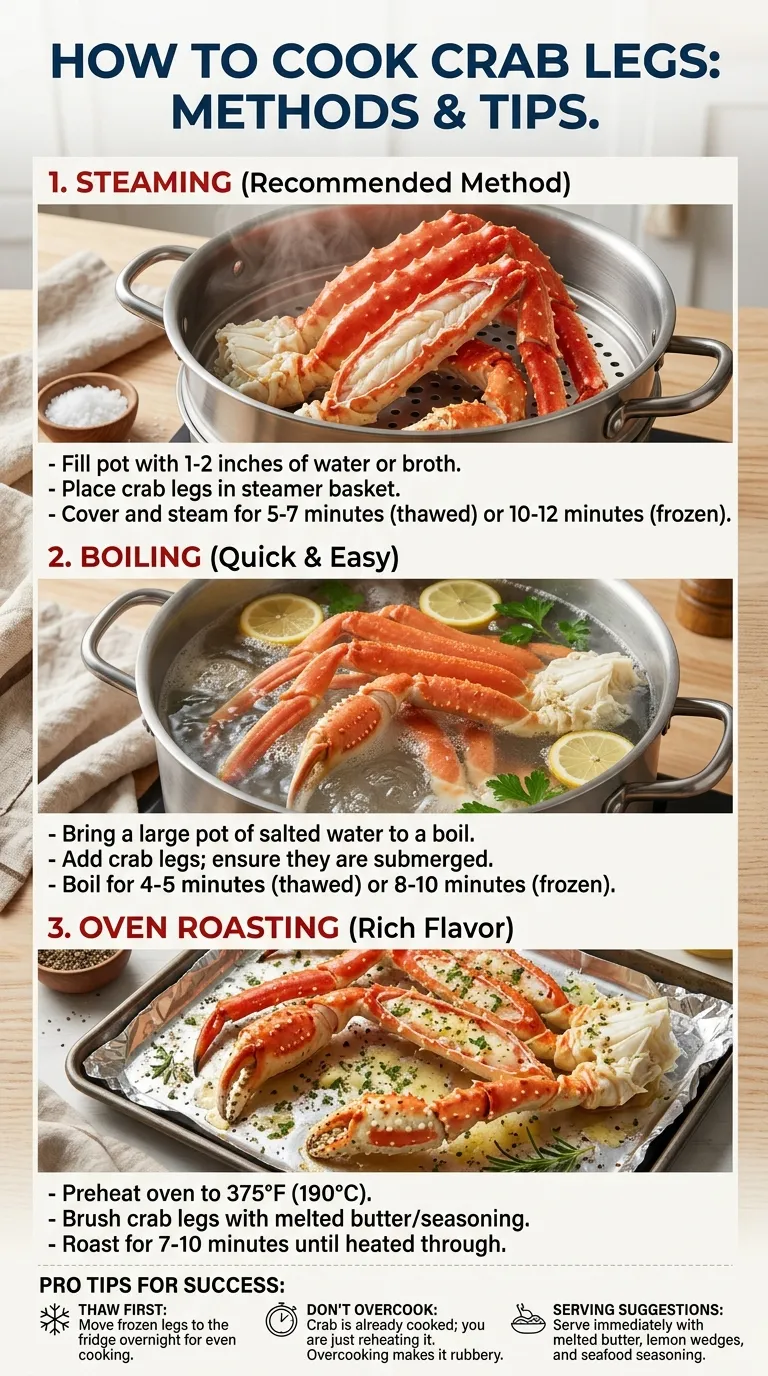

The process of cooking crab legs can be an enjoyable and satisfying How to Cook Crab Legs you’re planning a fancy dinner or craving flavorful, succulent meat to eat at home, learning the best ways to cook crab legs will make how-to-cook-crab-legs easier. Fortunately, there are quite a few ways to cook crab legs with each method providing its own unique flavors and textures. Read on for a step-by-step guide to cooking crab legs.
Choosing the Right Crab Legs
Before cooking, it’s essential to select high-quality crab legs. The most common types available are:
- King Crab Legs: Known for their sweet flavor and meaty texture.
- Snow Crab Legs: More tender and slightly sweeter than king crab.
- Blue Crab Legs: Leaner and with a more delicate taste.
Focus on buying fresh or frozen crab legs, ensuring they are properly packaged and have no strong odors.
Preparation Steps
Once you have your crab legs ready, here’s how to prepare them:
- Thawing: If your crab legs are frozen, thaw them overnight in the refrigerator, or place them in a sealed plastic bag and submerge in cold water for about 30 minutes.
- Cleaning: Rinse the crab legs under cold water to remove any sand or debris.
- Cutting: Use kitchen scissors to cut through the shell on the top side, making it easier to access the meat later.
Methods to Cook Crab Legs
There are multiple ways to cook crab legs, and the method you choose depends on your personal taste and convenience. Here are some of the most popular techniques:
Boiling
Boiling is a straightforward method that allows you to infuse flavors easily.
- Fill a large pot with water and add salt and optional seasonings like Old Bay or lemon.
- Bring the water to a rolling boil.
- Add the crab legs and cover the pot.
- Boil for about 5-7 minutes if thawed (8-10 minutes if frozen).
- Using tongs, remove the crab legs and let them drain.
Steaming
Steaming keeps the meat moist and allows for more flavor retention.
- Fill a pot with a few inches of water, and place a steam basket inside.
- Bring the water to a boil.
- Place the crab legs in the steam basket and cover the pot.
- Steam for about 6-8 minutes if thawed (10-12 minutes if frozen).
Baking
Baking is a delicious method that allows you to incorporate various flavors.
- Preheat your oven to 350°F (175°C).
- Place the crab legs on a baking sheet lined with foil.
- Brush with melted butter and add seasonings like garlic, lemon juice, and herbs.
- Bake for about 15-20 minutes.
Grilling
Grilling adds a smoky flavor that complements the natural sweetness of crab legs.
- Preheat the grill to medium heat.
- Brush the crab legs with olive oil and your favorite spices.
- Place them directly on the grill, cooking for about 4-5 minutes on each side.
Serving Suggestions
After cooking your crab legs, consider serving them with:
- Melted butter
- Lemon wedges
- Garlic sauce
- Seasoned rice or vegetables
Pair with a refreshing drink to enhance your seafood dining experience.
Helpful Tips
- For a richer flavor, try adding herbs or spices to the cooking water.
- Always err on the side of caution when cooking seafood; undercooked crab can be an issue.
- Keep leftovers sealed in an airtight container in the fridge for up to three days.
For additional recipes and crab cooking techniques, check out SeafoodSource or Food Network. Enjoy your crab legs cooked to perfection!
The Nutritional Benefits of Eating Crab

Crab is a tasty seafood dish that provides plenty of nutrients, making it ideal for people wanting to boost their diet. Crab is a delicious treat for the taste buds, an extremely versatile ingredient in many different foods, and an excellent source of useful nutrients.
Nutritional Profile of Crab
Crab is low in calories yet high in protein. Here’s an overview of the nutritional content per 3.5 ounces (100 grams) of cooked crab, specifically blue crab:
| Nutrient | Amount |
|---|---|
| Calories | 97 |
| Protein | 20 g |
| Fat | 1 g |
| Carbohydrates | 0 g |
| Vitamin B12 | 8.8 µg |
| Selenium | 47 µg |
This potent combination of nutrients shows why crab can fit well into a balanced diet.
High-Quality Protein Source
The protein content of crab is one of its most extraordinary health benefits. Protein is a macronutrient that plays an important role in building and repairing tissues, producing hormones and enzymes, and supporting general bodily functions. Crab is a healthy source of protein, which will keep you feeling full and satisfied.
Rich in Omega-3 Fatty Acids
Crab is further a good source of heart-healthy omega-3 fatty acids. Omega-3s also alleviate inflammation and prevent chronic diseases (like heart disease and arthritis). Adding crab to the menu can be part of making sure you’re getting plenty of omega-3 fatty acids, which many people fall short on.
Essential Vitamins and Minerals
Crab contains several vitamins and minerals that are vital for your health:
- Vitamin B12: Important for nerve function and red blood cell formation.
- Selenium: Plays a key role in reproduction, thyroid hormone metabolism, and DNA synthesis.
- Zinc: Crucial for immune function, wound healing, and protein synthesis.
These vitamins and minerals combine to promote overall health and well-being, making crab a nutritious addition to your meals.
Low in Fat and Calories
For those of you watching your weight or trying to live a healthy lifestyle crab works great. Crab meat has about 97 calories and only 1 gram of fat per serving, allowing you to indulge without guilt. This makes it versatile to add in a variety of food dishes from salads to pasta.
Supports Weight Management
Crab can be helpful for people trying to regulate their weight. One important property of high-protein foods is that they promote fullness, which can help you control your appetite and caloric intake more efficiently. Crab is a nutritious and delicious dish to eat when combined with other healthy foods.
Great for Healthy Skin
Aside from internal health, selenium which is abundant in crab also plays a role in your skin health. This mineral protects your skin against sun damage and can also enhance elasticity. And, of course, crab is high in vitamin B12, too — great for glowing skin.
How to Incorporate Crab into Your Diet
Crab is versatile and can be enjoyed in various dishes:
- Add crab meat to salads for a protein boost.
- Use crab in pasta dishes for added flavor and texture.
- Make crab cakes for a classic and tasty appetizer.
- Incorporate crab into stir-fries or soups for depth and richness.
By adding crab to your meals, you can enjoy not only the delightful taste but also all the associated health benefits.
For more information about the nutritional benefits of crab and delicious recipes, check out Seafood Watch and Eat Crab.
Crab into your diet solidifies it as a nutrient-rich and versatile food that can enhance your health while delivering great taste!
Popular Dipping Sauces for Crab Legs
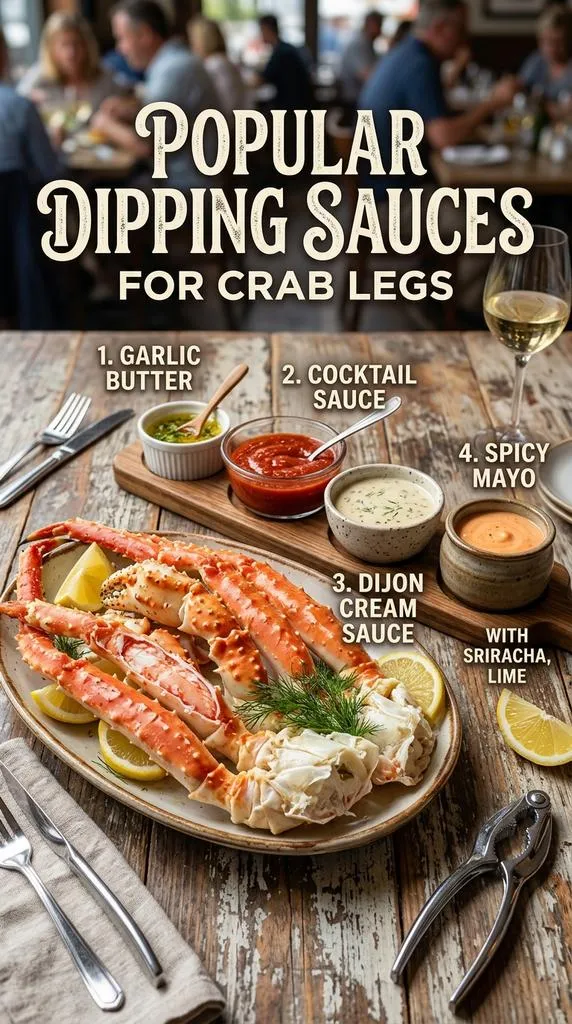
And if you are prepared to enjoy the crab legs of your desires, just a great dipping sauce can elevate your feast to a whole new level. There are a number of popular sauces that pair perfectly with crab, whether you prefer something rich and buttery or a little zesty. In this post, we’ll look at some of the most popular dipping sauces that will go perfectly with your crab leg party.
Classic Drawn Butter
Drawn butter is one of the most classic and beloved dips for crab legs. This simple but sumptuous recipe needs only one ingredient — unsalted butter. Step 1: In preparation, melt the butter on a low flame, warm it just until gooey but not boiling. It’s not so much a sauce as it is a rich, creamy texture that complements the sweet meat of the crab and brings opulent heft to your meal. A splash of fresh lemon juice is optional for added flavor.
Cocktail Sauce
Cocktail sauce offers a tangy twist that many enjoy alongside their crab legs. Here’s a quick and easy recipe to whip up your own:
- 1 cup of ketchup
- 2 tablespoons of horseradish (adjust based on your heat preference)
- 1 teaspoon of lemon juice
- 1 tablespoon of Worcestershire sauce
Combine all the ingredients in a bowl and stir well. The zesty kick from the horseradish pairs nicely with the sweet flavors of the crab, making this a favorite.
Garlic Lemon Butter Sauce
If you enjoy a bit more complexity in your flavors, try garlic lemon butter sauce. This rich sauce features:
- 1 cup unsalted butter
- 4 cloves garlic, minced
- Juice of one lemon
- Salt and pepper to taste
To make this sauce, you’ll want to melt the butter in a saucepan, add the minced garlic and let it cook until fragrant. Then whisk in the lemon juice and season with salt and pepper. This garlicky treat complements the crab’s flavour without overwhelming it.
Spicy Aioli
For those who crave a little heat, a spicy aioli can be an exciting option. This creamy garlic mayonnaise complements crab legs beautifully. Here’s how to make it:
- 1 cup mayonnaise
- 2 cloves garlic, minced
- 1 tablespoon lemon juice
- 1 teaspoon hot sauce (adjust according to taste)
Mix all ingredients together in a small bowl, and you’ll have a rich, zesty dip that brings a flavorful punch to your crab feast.
Mustard Sauce
Mustard sauce, with its tangy and slightly sweet flavor, pairs well with the natural sweetness of crab. A simple mustard sauce recipe includes:
- 1/2 cup Dijon mustard
- 1/4 cup honey
- 1 tablespoon apple cider vinegar
This is a very simple dipping sauce that adds an interesting twist to your meal to whisk these ingredients together. The honey is sweet and the mustard brings some tang, which plays nicely with the crab.
Herb Butter Sauce
If you’re looking to add a fresh pop to your crab legs, herb butter sauce is a fantastic choice. Combine:
- 1 cup unsalted butter
- 2 tablespoons parsley, finely chopped
- 1 tablespoon chives, finely chopped
- 1 tablespoon tarragon, finely chopped
Melt the butter and stir in the fresh herbs. This sauce is both vibrant and aromatic, adding a seasonal touch to your crab dish.
Before you dive into those crab legs, make some of these delicious dipping sauces. Learn how the unique nuances of each sauce can elevate the experience of every bite you take. For more elaborate recipes and tips, see Serious Eats; also for some inspiration, Food Network.
Pairing Sides with Crab: Best Complementary Dishes
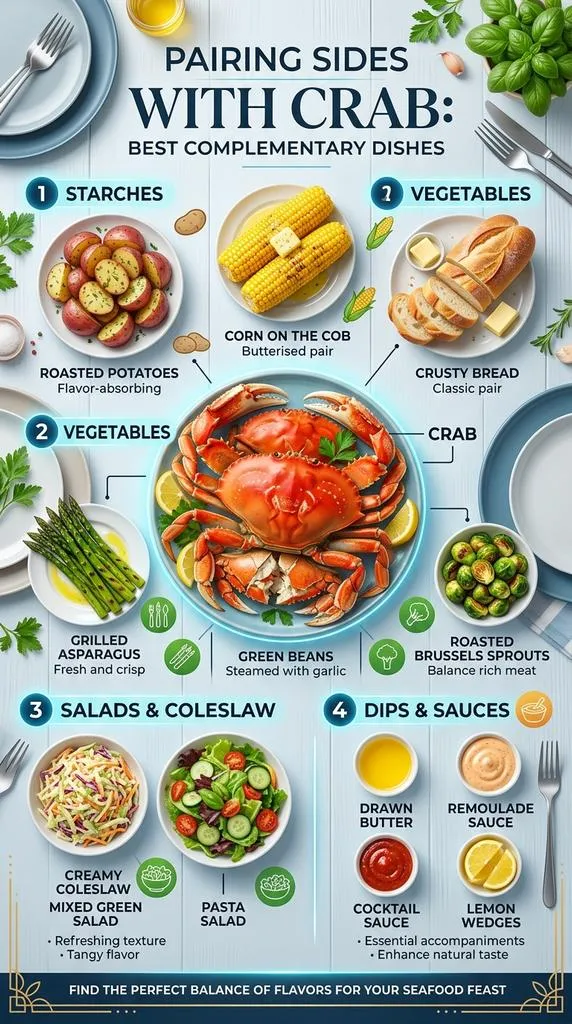
Crab is best known for the sweet meat that hides in its tender legs. But matching the right sides can take your crab feast from ordinary to a well-rounded meal. You should consider flavors and textures and colors that pair beautifully with the lovely richness of crab. Here are some of the best side dishes to go with crab that will impress your guests and have yours taste buds popping.
Classic Sides that Enhance Crab
When preparing a meal of crab, it’s essential to complement it with classic sides that enhance the dish rather than overpower it. Here are some popular options:
- Corn on the Cob: The sweetness of fresh corn pairs beautifully with the delicate flavor of crab. Grilled or boiled, it’s a must-have at any crab dinner.
- Coleslaw: A crunchy coleslaw adds a refreshing contrast to the soft texture of crab. Choose a vinegar-based dressing for a lighter touch instead of a creamy one.
- Garlic Butter Bread: This is a favorite choice for soaking up any leftover crab juices. The rich, buttery flavors harmonize perfectly with crab.
Vegetable Dishes that Balance the Meal
Including vibrant vegetable dishes in your meal not only adds color but also provides a balance to the richness of crab. Consider these options:
- Asparagus: Lightly steamed or roasted, asparagus offers a hint of earthiness and crunch. You can drizzle it with lemon juice for an extra zing.
- Garlic Green Beans: Sautéed green beans with garlic create a savory addition that complements crab’s sweetness and is full of nutrients.
- Roasted Brussels Sprouts: Their nutty flavor pairs exceptionally well with crab. Toss them with olive oil, balsamic vinegar, and bacon bits for extra flavor.
Starchy Sides for a Filling Meal
If you’re looking to make your crab meal more filling, then starchy sides are perfect. They not only offer sustenance but also provide texture contrasts:
- Potato Salad: A creamy potato salad offers a heartiness that complements the delicacy of crab. Opt for one with herbs that can uplift the flavors, such as dill or parsley.
- Rice Pilaf: A light, fluffy rice pilaf can serve as a great base for crab. Using herbs and spices in the pilaf enhances the aromatic experience of your meal.
- Pasta Salad: A cold pasta salad, especially with a vinaigrette dressing, provides a refreshing palate cleanse between bites of crab.
Exciting Additions to Surprise Your Guests
If you want to take your crab meal to the next level, consider some unexpected sides that surprise but delight:
- Spicy Mango Salsa: The sweetness of mango pairs wonderfully with crab. The hint of spice adds an exciting flavor dimension.
- Caprese Salad: This classic Italian salad combines fresh mozzarella, tomatoes, and basil. The bright flavors add a refreshing element to your crab dish.
- Grilled Pineapple: The caramelized sweetness of grilled pineapple can complement crab beautifully, delivering a sweet tropical twist.
Essential Dipping Sauces
To elevate your crab dining experience completely, don’t forget about the right dipping sauces:
- Drawn Butter: A classic choice that enhances the richness of the crab. It’s simple and indulgent.
- Garlic Aioli: This creamy garlic sauce adds a deeper flavor that can be a lovely change from the traditional lemon and butter.
- Spicy Remoulade: For those who enjoy a little heat, a spicy remoulade brings bold flavors that pair well with crab.
Visit Crab Spot or Seafood Source for more yummy crab meal and side recipes. Experimenting with various components and presentation styles really take your meal to the next level visually, while also adding layers to the eating experience that will ensure you keep returning!
Seafood Cooking Essentials: Tools and Techniques
When it comes to cooking seafood, having the right tools and techniques can make all the difference. Whether you’re a seasoned chef or a home cook, understanding the essentials of seafood preparation can enhance your culinary experience and yield delicious results. Here’s a comprehensive guide to the critical tools and techniques you’ll need for crafting perfect seafood dishes.
Essential Tools for Seafood Cooking
Equipping your kitchen with the right tools is crucial for effective and enjoyable seafood cooking. Here’s a list of essential tools every seafood enthusiast should have:
- Fish Spatula: This flexible spatula is designed to lift fish fillets without breaking them apart.
- Sharp Knives: A good chef’s knife and a filleting knife help in cleaning and preparing seafood precisely.
- Crab Crackers: These tools are essential for opening crab shells and getting to the sweet meat inside.
- Seafood Forks: Helpful for picking meat from shellfish.
- Steamer Basket: Perfect for cooking shrimp, mussels, or clams while retaining their moisture and flavor.
- Extravagant Platter: A visually appealing way to serve your seafood dish can enhance the dining experience.
Cooking Techniques for Seafood
Understanding various cooking techniques can elevate your seafood dishes. Here are some popular methods:
Grilling
Grilling seafood like shrimp and fish adds a smoky flavor and beautiful char to the dish. Make sure to oil the grill properly and keep an eye on the cooking time to prevent overcooking.
Broiling
Broiling is a great technique for cooking fish fillets. Place the fish on a baking sheet, drizzle with oil and seasoning, and place it under the broiler for quick and even cooking.
Sautéing
This method allows you to cook seafood quickly over high heat while retaining its moisture. Use a non-stick pan along with olive oil or butter to ensure the seafood doesn’t stick.
Poaching
Poaching seafood in a flavored liquid is a gentle cooking method that keeps the meat tender. Use broth, wine, or even coconut milk with herbs and spices for added flavor.
Baking
Baking seafood dishes, such as a casserole or stuffed fish, provides even heat distribution. Wrap your seafood in aluminum foil with herbs and butter to keep it moist.
Seafood Preparation Techniques
Preparation is key when it comes to seafood. Proper cleaning and handling will improve your dish’s flavor and ensure safety. Here are some preparation tips:
- Cleaning and Deboning: Always clean your seafood thoroughly. When dealing with fish, ensure you debone it properly for a pleasant eating experience.
- Thawing: If using frozen seafood, the best method is to thaw it in the refrigerator overnight. This ensures even thawing and safeguards against bacterial growth.
- Marinating: Marinating seafood can infuse flavors. Use a marinade containing acid (like lemon juice) to tenderize the meat.
Resources for Seafood Cooking Essentials
For further reading and detailed recipes, check out these helpful websites:
- Seafood Watch: A reliable resource for sustainable seafood options.
- Serious Eats: Offers diverse seafood recipes and cooking techniques.
- Food Network: Provides various seafood cooking videos and recipes.
Preparing Seafood Safely
Safety should always be a priority when cooking seafood. Always keep seafood refrigerated until you’re ready to cook. It is essential to monitor your cooking times and temperatures to ensure the seafood is properly cooked, which helps eliminate any risk of foodborne illness. Cooking seafood to an internal temperature of 145°F (62.8°C) is recommended.
Mastering the tools and techniques of seafood cooking can significantly improve your culinary skills. By equipping your kitchen with essential tools and understanding various preparation methods, you can create delicious seafood dishes confidently and safely. Happy cooking!
Conclusion
Crab legs can be a delightful culinary experience and allow you to taste their rich flavors and enjoy their tender meat. [This Is How to Steam Crab Legs]Whether you decide to steam, boil, bake or grill your crab legs they all bring their own unique taste and texture that will take your dinner up a notch. And crab legs slip into your culinary wheelhouse offer a host of their own nutritional benefits, making this seafood type as an excellent ally in a well-rounded diet.
Dipping sauces, such as drawn butter or lemon garlic sauce, can be a good way to add extra seasoning to crab legs. You could even class up your crab with proper sides, like buttery corn on the cob or garlic bread — or something lighter like coleslaw — for a spread that’s easy to make and open to modification.
Essential tools and techniques to cook crab perfectly Having the proper gear, including a steamer pot, crab mallet and kitchen shears, can help the process go smoothly and be fun. Whether you’re throwing a special event or just treating yourself to some tasty seafood, knowing how to cook crab legs takes your culinary skills up a notch.
When you know the various cooking methods, benefits of crab on your health and how to make that meal whole using side dishes and sauces it will allow you to plunge into the journey of cooking crab confidently. There will be plenty of opportunity to create wonderful moments around the dining table enjoying delicious crab legs! Have a great time, and bon appétit with this wonderful seafood dish.