

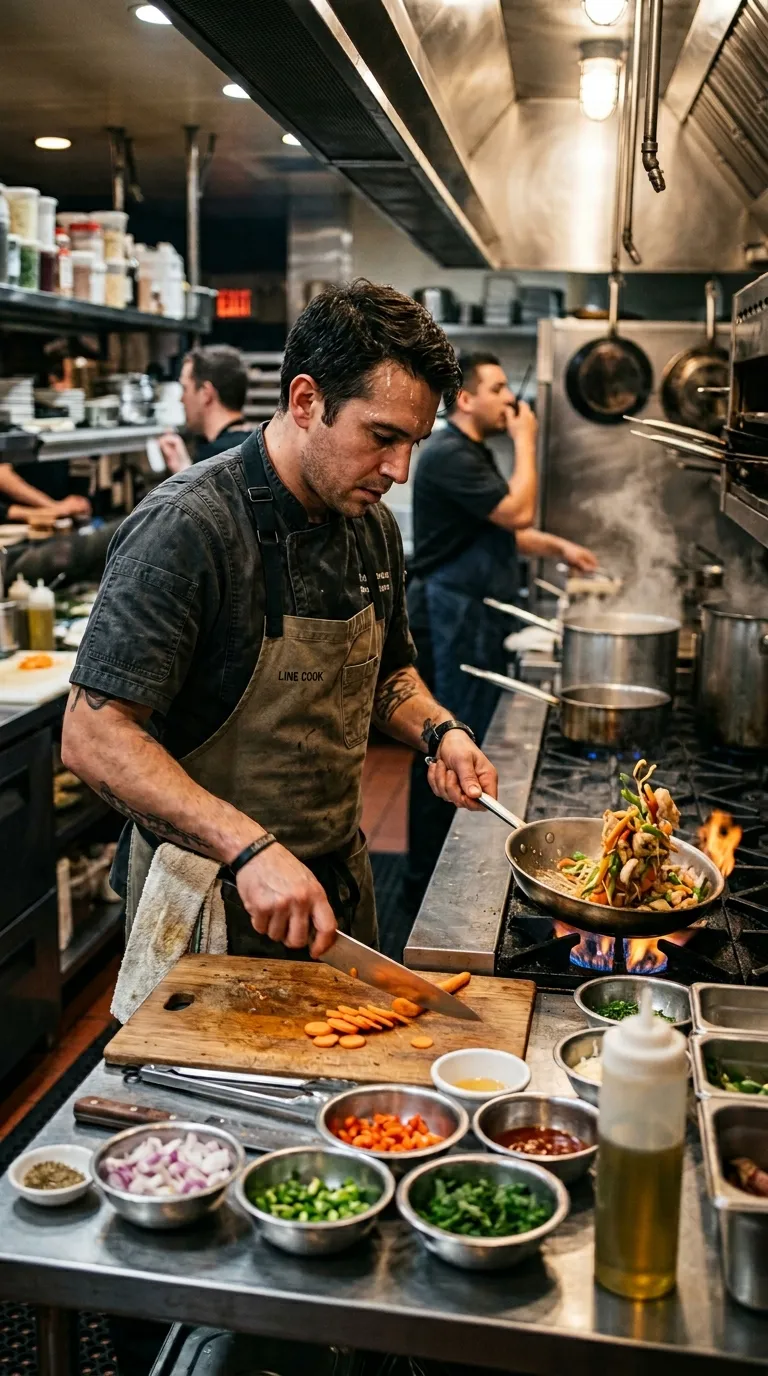

Line Cook: An Essential Position in the Cooking World They’re the backbone of any restaurant kitchen, responsible for preparing dishes and keeping things clean, so every plate looks — and if all goes well, tastes — great. Mastering a few necessary skills to positively excel as a line cook. Here’s a close up of those skills that can boost a line cook career.
1. Culinary Techniques
Every line cook needs a solid understanding of basic culinary techniques. This includes:
- Knife Skills: Precision in chopping, dicing, and slicing is fundamental. Mastering proper techniques helps ensure safety and efficiency.
- Cooking Methods: Grilling, sautéing, baking, and steaming are essential methods. Understanding how and when to use each technique can enhance flavor and presentation.
- Flavor Pairing: Knowing which ingredients complement each other is crucial for creating delicious dishes.
2. Time Management
In the high-pressure environment of a kitchen, time management is critical. A line cook must master the following:
- Prioritizing Tasks: Quickly assessing which dishes need to be prepared first is essential.
- Multitasking: Working on several dishes simultaneously while maintaining quality is key in a busy kitchen.
- Timing: Understanding how different cooking times affect dish quality can make or break a service.
3. Attention to Detail
Every component of a dish matters. Line cooks must develop a keen eye for detail to excel. Consider these aspects:
- Presentation: Dishes must be visually appealing. Thoughtful plating can elevate a meal from ordinary to extraordinary.
- Ingredient Quality: Ensuring freshness and quality in all ingredients is crucial. This directly impacts flavor and customer satisfaction.
- Consistency: Customers expect the same taste and presentation every time they visit. Consistency is essential for building a loyal clientele.
4. Communication Skills
Effective communication in the kitchen ensures smooth operations. Here are some aspects to focus on:
- Team Coordination: Understanding the roles of fellow kitchen staff and collaborating effectively can enhance workflow.
- Feedback Reception: Accepting constructive criticism graciously contributes to personal and professional growth.
- Instruction Following: Being able to follow instructions from chefs or sous chefs is essential for maintaining consistency and quality.
5. Cleanliness and Food Safety
Health and safety standards must be adhered to in the kitchen. A line cook should know:
- Sanitation Practices: Keeping workstations clean reduces the risk of foodborne illnesses.
- Proper Storage: Understanding how to store food safely can prevent spoilage and contamination.
- Handling Allergens: Knowing how to handle food allergies can protect both customers and the establishment.
6. Adaptability and Problem-Solving
The ability to adapt to changing circumstances is invaluable. Line cooks should hone these skills:
- Flexibility: Being open to last-minute changes or special requests can enhance the dining experience.
- Creativity: Coming up with alternative solutions when things go wrong helps keep operations running smoothly.
- Resourcefulness: Making the most of available ingredients can minimize waste and keep costs down.
7. Passion for Food
A true passion for food shines through in every dish. This enthusiasm can be infectious and inspire the entire kitchen team. Cultivating a love for culinary arts can lead to:
- Continuous Learning: Seeking out culinary classes or workshops shows commitment to personal growth.
- Innovation: Experimenting with flavors and techniques can lead to exciting new dishes and specials.
- Inspiring Others: A passionate cook can uplift their team and create a positive work environment.
If you want to learn how to be a line cook, these skills will help set you up for success. More aspiring cooks should join culinary school or find a mentor with years of experience. Web pages like Culinary Schools provide tools for the budding chef to learn and improve. Many people do not know that the National Restaurant Association Educational Foundation among other organizations offers food safety and kitchen management tips.
Adding to your skill set is a continuous process. Every single day in the galley presents both challenges and opportunities to learn. Line cooks can develop their abilities and further their careers by honing these skills
A Day in the Life of a Line Cook: Challenges and Rewards

So here you go, imagine the noise of a busy kitchen: pots and pans banging together, chefs calling out orders, food being cooked fresh and in bulk. This is what life looks like for a line cook. Cooking is a passionate pursuit for foodies and chefs alike, and a line cook’s day isn’t complete without its own thrills and frights.
Often a line cook’s shift starts before the restaurant opens to customers — early in the morning or late in the afternoon, for example. Prep work, which can take the form of dicing or measuring out ingredients, is key to setting up for a smooth service. Chopping vegetables, marinating proteins or preparing sauces not only guarantees that everything is ready, but also aids in understanding the day’s menu. This early hustle establishes the tone for everything after.
As the orders start coming in, things can quickly become hectic. Line cooks must work swiftly and efficiently. Here are some common aspects of their responsibilities:
- Plate Assembly: Line cooks are responsible for assembling dishes as per specific orders, ensuring that every plate meets the restaurant’s standards.
- Timing: Managing cooking times is critical. Dishes need to be ready at the right moment, especially during busy hours.
- Communication: Clear communication with team members, including servers, is essential to handle orders smoothly.
- Quality Control: Ensuring every dish has the right flavor and presentation is a top priority.
Stress can be common in the fast-paced setting of a kitchen. Line cooks need to think on their feet and adjust to curveballs, such as equipment failure or last-minute changes to orders. A dishwasher breaking down or a key ingredient running out isn’t rare, either; quick-fix skills are necessary to keep the event on track.
But amidst the chaos, comes great reward. Many line cooks take great delight in crafting culinary art and seeing customers enjoy their food. Nothing more exhilarating than the sense of accomplishment after a busy service. Additionally, you develop a great sense of camaraderie working with other passionate chefs. This bond also serves to alleviate the stress of the kitchen, as everyone helps each other through busy nights.
There are also avenues for career advancement for dedicated line cooks. You can go from a line cook to an advanced cooking position like sous chef or head chef. Because they learn basic cooking techniques under the supervision of professional chefs, they develop skills that may change their lives.
Line cooks also make good use of their time in the shift. In many cases, they will spend hours on their feet each day burning more calories than a sedentary job at a desk.
Here’s an overview of a typical day in the life of a line cook:
| Time | Activity |
|---|---|
| 8:00 AM | Arrive and prepare by setting up the workstation. |
| 9:00 AM | Prep ingredients for the day, ensuring freshness. |
| 11:00 AM | Complete prep and communicate with the team about the day’s specials. |
| 11:30 AM | Lunch service begins; take orders, start cooking. |
| 2:00 PM | Lunch service concludes; clean workspace. |
| 4:00 PM | Prep for dinner; review inventory and restock necessary items. |
| 5:30 PM | Dinner service begins; fast-paced order management. |
| 10:00 PM | Service ends; cleaning up and closing the kitchen. |
Being a line cook is hard work, but it can pay off in spades. For all those food enthusiasts out there, being a line cook is so much more than handling ingredients — it’s an adventure in creativity and teamwork. If you are thinking of taking this path, check out Food & Wine or Culinary Schools for guidance on culinary education and advancement.
In the thriving hospitality world, line cooks are an integral part in giving diners what they desire and creating unforgettable experiences. The daily struggles they encounter only lend an extra spark of joy to the task of making plates that make other people happy — this is why being a line cook can be so fulfilling — it weaves together adversity with fulfilment.
The Importance of Teamwork in the Kitchen
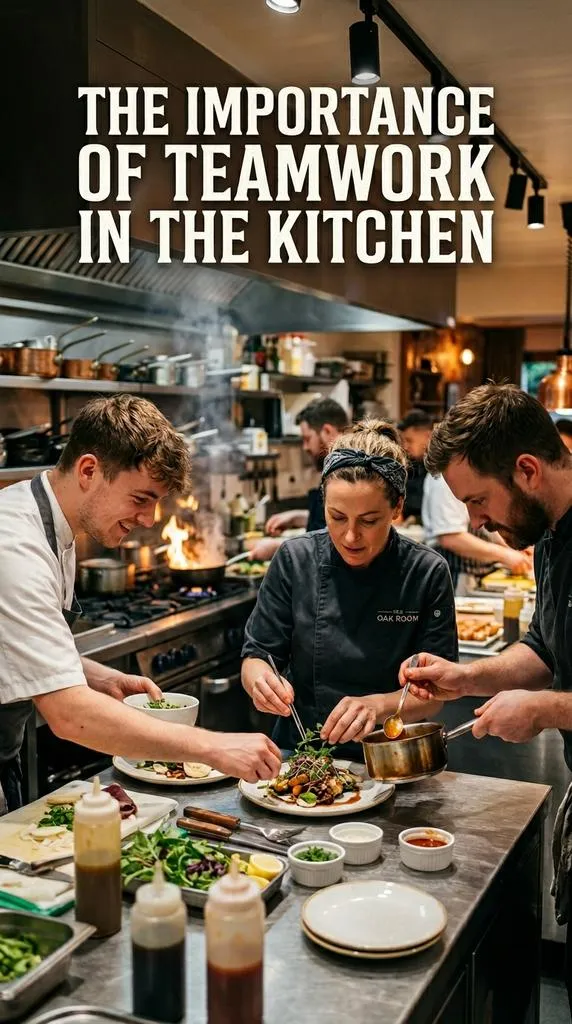
In the fast-paced atmosphere of food prep, the job of each line cook is critical. But often overlooked is the effectiveness of teamwork among kitchen staff. A kitchen is not just one person, but it is everyone who contributes to creating a beautiful experience for the dinner table. This applies either in a fine dining restaurant or a bustling café; working together can lead to improved efficiency, increased spirit and rising the quality of food delivered.
The Dynamics of Kitchen Teamwork
Every line cook plays a specific role within the kitchen hierarchy. These roles include positions such as:
- Prep Cook
- Sous Chef
- Pastry Chef
- Expediter
Frankly, each position has unique skills but what they have in common is their dependence on one another. For example, a prep cook prepares all the ingredients in advance and the sous chef leads line cooks during service hours. If everyone does their job, everything runs like clockwork.
Effective Communication
Communication is the backbone of effective teamwork. In a kitchen environment, mistakes can happen quickly if team members aren’t on the same page. Clear communication helps to:
- Reduce errors in orders
- Ensure timely service
- Enhance food quality
For instance, a line cook must convey to the expediter when dishes are ready. If they can express this clearly, the wait staff will deliver course after course in a timely manner. This results in greater customer satisfaction and improved reviews.
Building Trust and Camaraderie
Teamwork is essential in a kitchen and trust to work with your peers is imperative. Line cooks who trust each other are more likely to seek help when they need it, or pitch in to help a colleague. That kind of spirit may create a sense of camaraderie that can improve morale and make work more fun.”
Things like team-building events or kitchen challenges can also help foster this camaraderie. They also foster opportunities for line cooks to socialize out of stressful service hours, further building their teamwork skills.
Efficiency and Time Management
In a kitchen, efficiency is king — it’s a fast-paced environment. Proper task distribution is another aspect of teamwork that leads to improved time management. Three line cooks working together can do more in the same amount of time than three people making their food alone.
| Task | Individual Completion Time | Team Completion Time |
|---|---|---|
| Preparing Vegetables | 30 minutes | 15 minutes |
| Cooking Pasta | 20 minutes | 10 minutes |
| Plating Dishes | 25 minutes | 12 minutes |
This table highlights how teamwork can significantly reduce the time spent on various tasks in the kitchen, allowing for more meals to be prepared efficiently.
Quality Control
When line cooks work in partnership, they also create a higher level of quality control. Every member can verify work performed by others, provide corrections/feedback when needed. The joint collaborative forces create remarkably excellent dishes that will wow diners.
In addition, line cooks trade tips and techniques that help them be better at their jobs. When cooks mentor one another, they can lift the skill level of an entire kitchen, which contributes to both extraordinary offerings.
Acknowledging the Importance of Team Spirit
In addition, line cooks trade tips and techniques that help them be better at their jobs. When cooks mentor one another, they can lift the skill level of an entire kitchen, which contributes to both extraordinary offerings.
Teamwork isn’t just a buzzword; it’s the fulcrum of kitchen operations. Good line cooks know that they are one of many cogs in a bigger machine, and that the machine runs best when all the cogs mesh together smoothly.
For further insights into culinary teamwork, check out Culinary Schools and Food & Wine.
Navigating Stress and Time Management as a Line Cook
Working as a line cook is an intense job that marries food artistry with ruthless time management and stress endurance. Understanding these processes is vital to flourishing in this time of high-speed kitchens. When it comes to working in a kitchen, whether you are experienced or new, learning how to deal with stress and properly manage your time can improve both your performance at work and your enjoyment of the job.
Understanding Your Work Environment
The kitchen is usually full of activity and peak hours can get a bit hectic. Line cooks have to get used to the din, heat and frenzy. Here are some things to remember:
- Fast-paced environment: Orders come in quickly, and the pressure mounts as customers anticipate their meals.
- Multitasking: Line cooks often manage several tasks simultaneously, from prepping ingredients to plating dishes.
- Teamwork: Building good relationships with coworkers is essential for a smooth operation.
Time Management Tips
Time management is a crucial skill for a line cook. Efficiently using every moment helps keep the kitchen running smoothly. Here are some strategies to optimize your time:
- Prioritization: Identify tasks that must be completed first and focus on those. For instance, prep items for dishes that will be served early in the service.
- Mise en place: Prepare and organize ingredients before the rush. This practice allows for quicker service and less stress.
- Set time limits: Assign specific time frames for tasks. For example, spend no more than 10 minutes on a specific dish during peak times.
- Minimize distractions: Limit chatting or unnecessary movements during service hours to maintain focus.
Managing Stress Effectively
Stress can lead to mistakes, impacting food quality and service speed. Here are methods to reduce stress as a line cook:
- Stay organized: Keep your workstation tidy. A clutter-free space helps reduce anxiety.
- Practice deep breathing: Take a few moments to breathe deeply to help calm your nerves during tense moments.
- Learn to say no: If your plate is full and someone asks for additional help, kindly decline or ask them to wait until you’re available.
- Seek support: Don’t hesitate to ask your team for help when the workload becomes overwhelming.
Physical and Mental Health
Being a line cook takes a toll on both your body and mind. It’s essential to emphasize your health while managing stress:
- Stay hydrated: Drink plenty of water throughout your shift to maintain energy levels.
- Healthy meals: Opt for nutritious foods that provide sustained energy rather than sugary snacks that lead to crashes.
- Physical exercise: Engage in regular physical activity outside of work to combat the physical demands of cooking.
- Mental breaks: During breaks, take time away from the kitchen, as it can help refresh your mind.
Building Resilience
Resilience is a line cook’s best friend. Facing challenges with a positive attitude can significantly alter your experience in the kitchen:
- Reflect on experiences: After a hectic shift, think about what went well and what could improve.
- Maintain a positive mindset: Focus on the joy of creating delicious meals rather than just the pressure of the hustle.
- Learn from mistakes: Appreciate the learning opportunities that come from errors or challenging shifts.
If you are a line cook and want to improve your skills and stress management, there are resources online. There are sites like Serious Eats that people may look to for culinary knowledge, and The Kitchn has numerous recipes as well as advice tips on how to be more efficient in the kitchen. For formal training you could also look into the Culinary Institute of America to further your profession development.
Embracing the challenges of being a line cook can lead to a rewarding and fulfilling career. With effective time management and stress navigation, you can thrive in this dynamic field.
Career Advancement Opportunities for Line Cooks in the Culinary World

For the budding culinary professional, one of her/his first steps in what can be a lucrative career is to become a line cook. And finally, what about line cooks, those hardworking and unsung heroes of the kitchen who prepare dishes to order while striving for quality and a high standard. But what comes next after that first role? In the culinary field, there are line cook promotions outlined below that illustrate how you can take steps toward climbing the kitchen ladder.
1. Advancement to Sous Chef
Once you get your feet wet as a line cook, the next logical step is typically to become a sous chef. The sous chef is the head chef’s right hand, managing both the kitchen and its personnel. It is a leadership role, and multitasking is vital. To become a sous chef:
- Continue developing culinary techniques and specialty dishes.
- Take on additional responsibilities, such as training new cooks.
- Show initiative by suggesting menu ideas or improving kitchen operations.
2. Head Chef or Executive Chef
The line is the kitchen equivalent of a junior employee, someone who can work their way up to head chef or executive chef with enough experience, dedication and skill. It is the highest culinary position in a restaurant, overseeing menu development, kitchen staff management and food quality. Here’s what you need to do to get ready for this illustrious role:
- Acquire management skills through workshops or courses.
- Network with professionals in the industry.
- Keep honing your cooking techniques and stay updated on culinary trends.
3. Specialized Chef Roles
Some line cooks may choose to specialize in a particular area of the culinary arts. Specializing can lead to unique career paths, such as:
- Pâtissier: A pastry chef focusing on desserts and pastries.
- Sous-Chef de Cuisine: A right-hand chef who focuses on managing the kitchen.
- Personal Chef: Providing customized meal preparations for individuals or families.
Specialization often requires additional training or experience but opens doors to unique opportunities.
4. Culinary Consultant
Those interested in presentation—and who love to write—can move into food styling or writing about it. Food stylists create artful dishes for the purposes of photographs, food writers write about those dishes through articles like recipes or restaurant reviews.
- Extensive culinary knowledge and experience.
- Strong communication skills for collaborating with various teams.
- Business acumen to understand the operations of various establishments.
5. Starting a Restaurant or Food Business
If you have a passion for entrepreneurship, you might consider starting your own restaurant or food business. This ambitious step comes with challenges but can be highly rewarding. Useful tips include:
- Drafting a solid business plan.
- Understanding the financial aspects of running a business.
- Choosing the right location and target market.
6. Food Stylist or Food Writer
Even higher learning can line cooks pursue to advance their careers. Look into culinary schools or food science programs to enhance your skills and resume. Institutes like the Culinary Institute of America and James Beard Foundation have excellent courses on something related to different parts of cooking.
7. Formal Education Opportunities
When you search for an advancement opportunity, getting connected with a professional network helps so much within the culinary world. Below are some great ways to grow your network:
Building a Network
There are many possible career paths for line cooks. Familiarising yourself with these pathways and developing your skills further will take your culinary career to new heights. Whether your goal is to enhance or advance into a more leadership position, or specialize in a niche area, dedication and passion are the key factors for success.
- Attend culinary festivals and events.
- Participate in local chef associations.
- Engage on social media platforms, including Instagram and LinkedIn.
The life of a line cook is hard but rewarding. It calls for a special set of skills — knife handling, cooking methods and the ability to juggle multiple elements in a chaotic scene. Between getting through dinner service in a timely manner and making sure standards of food quality remain high, every day can be something new to hang your hat on. There is a sense of satisfaction that comes with serving a well-made plate during the madness.
| Career Path | Skills Needed |
|---|---|
| Sous Chef | Leadership, multitasking |
| Executive Chef | Management, culinary creativity |
| Culinary Consultant | Culinary knowledge, communication |
Embrace the journey and keep on growing in your craft!
Conclusion
The kitchen relies on teaming work, and as a line cook, you automatically become an essential part of a larger team. Working with chefs, servers and other cooks helps ensure a smooth dining experience for customers. This not only improves efficiency, it also creates positive work environment.
Another important aspect of the job is handling stress. Time management is crucial and can help ease a lot of load during peak hours. Understanding methods such as prioritizing responsibilities and keeping a level head can improve one’s output and satisfaction at work.
A line cook job is often the first step toward something bigger for people who are serious about food. Whether you progress to become a sous chef and then Chef de Cuisine in a kitchen, there are many opportunities for career advancement in the culinary world.
For those passionate about cooking, the line cook position serves as a stepping stone to greater opportunities. From becoming a sous chef to eventually running your own kitchen, there are numerous pathways for career advancement in the culinary field.
In the end, a line cook’s existence is one of development, obstacles and brotherhood. As you start along the journey of not just becoming a successful line cook, but also preparing to take more culinary adventures in your career, embrace what you learned from the struggles and use those skills to help keep you stress-free and build strong relationships with your fellow coworkers.