

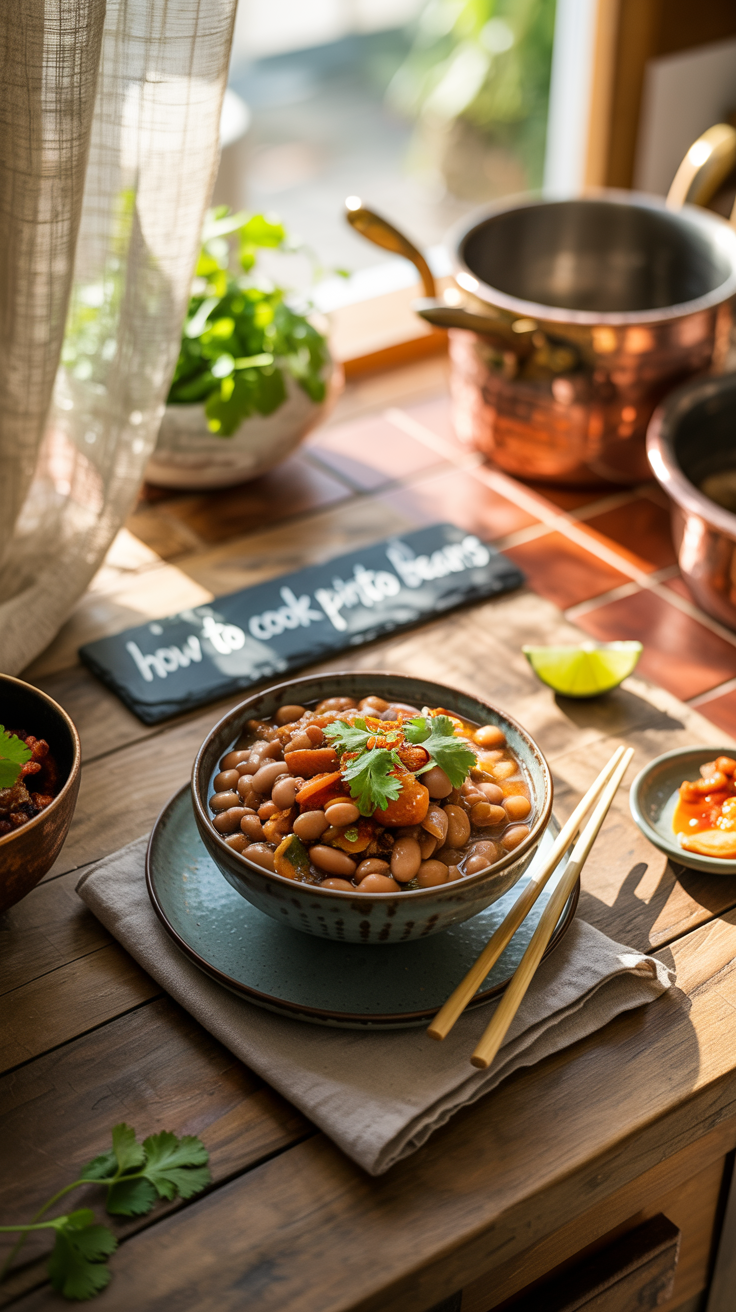
Pinto beans are a wholesome staple that many how-to-cook-pinto-beans the globe employ. They are easy enough to cook that you can include their richly flavored, creamy texture in any number of dishes. Here’s a guide to cooking pinto beans from start to finish that will have you turning out more perfect batches each time.
- Ingredients:
- 1 cup dried pinto beans
- Water
- Salt (to taste)
- Optional seasonings (garlic, onion, bay leaves, etc.)
- Equipment:
- Large bowl
- Strainer
- Pot or slow cooker
- Spoon
Step 1: Prepare the Beans
Before you cook your pinto beans, it’s essential to prepare them properly.
- Rinse the dried pinto beans under cold running water. This helps to remove any dust or debris.
- Check for non-bean items (like small stones) and discard them.
- Soak the beans in water for at least 6-8 hours or overnight. Soaking helps to soften the beans, reducing cooking time, and improves digestibility.
Step 2: Drain and Rinse
After soaking, drain the beans and rinse them again. This step helps to remove any remaining debris and reduces some of the complex sugars that cause gas.
Step 3: Cook the Beans
Now it’s time to cook your pinto beans. There are different methods you can use:
Stovetop Method
- In a large pot, add the soaked beans and enough water to cover them by about 2 inches.
- If you like, add seasonings such as chopped onion or garlic for extra flavor.
- Bring the water to a boil over high heat.
- Once boiling, reduce the heat to low, cover the pot, and let it simmer for about 1.5 to 2 hours. Check occasionally and add more water if needed to keep the beans submerged.
- Once the beans are fork-tender, season with salt to taste.
Slow Cooker Method
- Add the soaked beans to the slow cooker and cover them with water, ensuring they are submerged.
- Add optional seasonings if desired.
- Set the slow cooker to low for 6-8 hours or high for 3-4 hours.
- Season with salt toward the end of the cooking time.
Step 4: Check for Doneness
Pinto beans are a wholesome staple that many kitchens across the globe employ. They are easy enough to cook that you can include their richly flavored, creamy texture in any number of dishes. Here’s a guide to cooking pinto beans from start to finish that will have you turning out more perfect batches each time.
Step 5: Storing Cooked Pinto Beans
If using beans that were cooked but not used, store in an airtight container in the refrigerator for up to 4 days. You can freeze them for longer storage, too. Just be sure to portion them out for ease of use later on.
Serving Suggestions
Cooked pinto beans can be enjoyed in various ways:
- Serve them as a side dish with rice and salsa.
- Incorporate them into soups or stews for added protein.
- Use them in tacos or burritos for a hearty filling.
- Top a salad with cooked beans for extra nutrition.
Learn More About Pinto Beans
For additional recipes and cooking tips, you can visit The Bean Institute. They provide excellent resources and information on various types of beans, including pinto beans.
For inspiration on meal prep using pinto beans, check out Cooking Light. Their recipes focus on healthy eating using nutritious ingredients.
Here we can excuse one in a particularly glaring oversight: Pinto bean preparation is relatively easy. Follow these steps and you will become master of the pot, making perfect pinto beans every time and getting the most health benefit from this nutritious legume.
The Nutritional Benefits of Pinto Beans in Your Diet
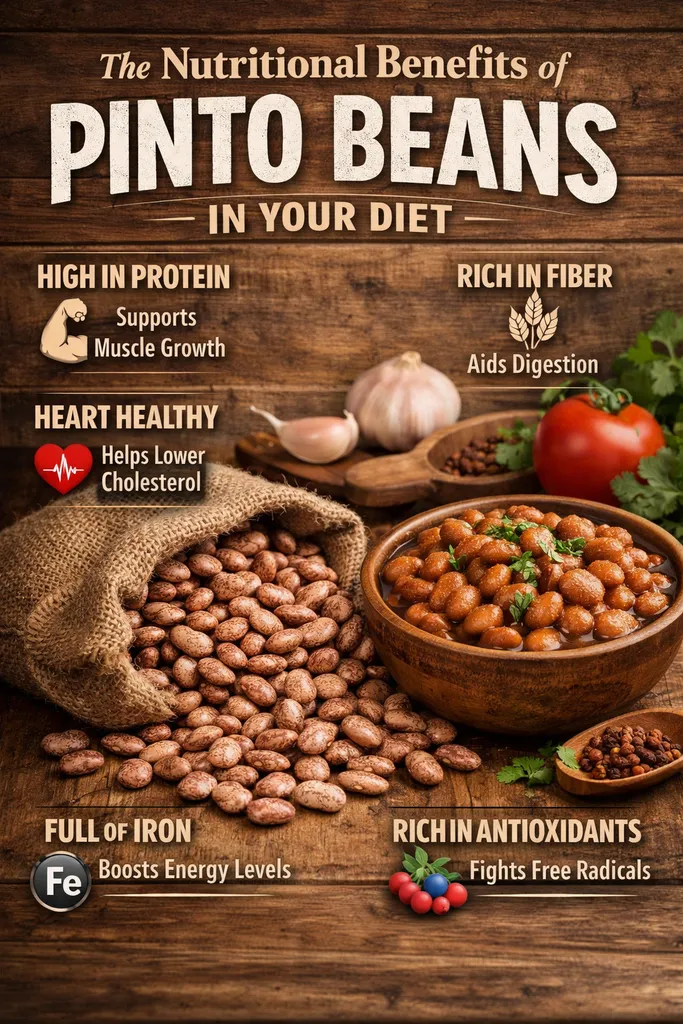
Not only are Pinto beans a delicious addition to many dishes, they have some serious health benefits as well. Back to pinto beans, whether you’re a master chef or an amateur in the kitchen, understanding the advantages of consuming pinto beans can aid your cooking as well as benefit your wellbeing.
Rich in protein, fiber, vitamins and minerals, these beans are an important component of many diets. They’re good in Mexican and Southwestern cuisines but can readily work their way into just about any culinary tradition. Here’s a closer look at why you might want to incorporate more pinto beans into your meals.
Nutritional Profile of Pinto Beans
Pinto beans are particularly notable for their impressive nutritional profile. A one-cup serving of cooked pinto beans offers the following:
| Nutrient | Amount per 1 cup cooked |
|---|---|
| Calories | 245 |
| Protein | 15.2 grams |
| Fat | 0.9 grams |
| Carbohydrates | 45.3 grams |
| Fiber | 15.5 grams |
| Sugars | 0.6 grams |
| Folate | 64 micrograms |
| Iron | 4.3 milligrams |
Health Benefits of Pinto Beans
Now that you know what pinto beans contain, let’s explore how these nutrients benefit your health:
- High in Protein: Pinto beans are an excellent plant-based source of protein which is vital for muscle repair and overall body function.
- Rich in Dietary Fiber: The high fiber content aids digestion, helps maintain bowel health, and can assist in weight management by keeping you full longer.
- Supports Heart Health: Pinto beans can help lower cholesterol levels, contributing to better cardiovascular health.
- Good Source of Folate: This vitamin is essential for DNA synthesis and is particularly important for pregnant women to support fetal development.
- Iron Boost: Eating pinto beans can help combat iron deficiency anemia, especially in individuals following vegetarian or vegan diets.
- Regulate Blood Sugar: The low glycemic index of pinto beans means they release sugar slowly into the bloodstream, helping to stabilize blood sugar levels.
How to Incorporate Pinto Beans into Your Diet
There are countless ways to enjoy pinto beans. Here are a few ideas:
- Add them to soups and stews for extra protein.
- Use them in burritos or tacos for a hearty filling.
- Puree cooked pinto beans to create a creamy dip.
- Mix them into salads for added texture and nutrients.
- Serve them as a side dish seasoned with spices.
Including Pinto beans in your diet can play an integral role for your health. They are nutritious beans that serve the body in numerous functions due to their high protein and fiber content, not to mention all your daily vitamins and minerals. You don’t need to be a culinary genius to reap the rewards, either; add them here and there to your meals in simple ways, and you’re on your way to living healthier.
Final Thoughts
Pinto beans are good for you; they make anything better. Not only do they add flavor to dishes, but they are also an amazing source of protein and fiber. These are some of our favorite recipes that highlight pinto beans in flavorful ways.
For more information on healthy eating and recipes featuring pinto beans, check out The Kitchn.
Popular Recipes Featuring Pinto Beans
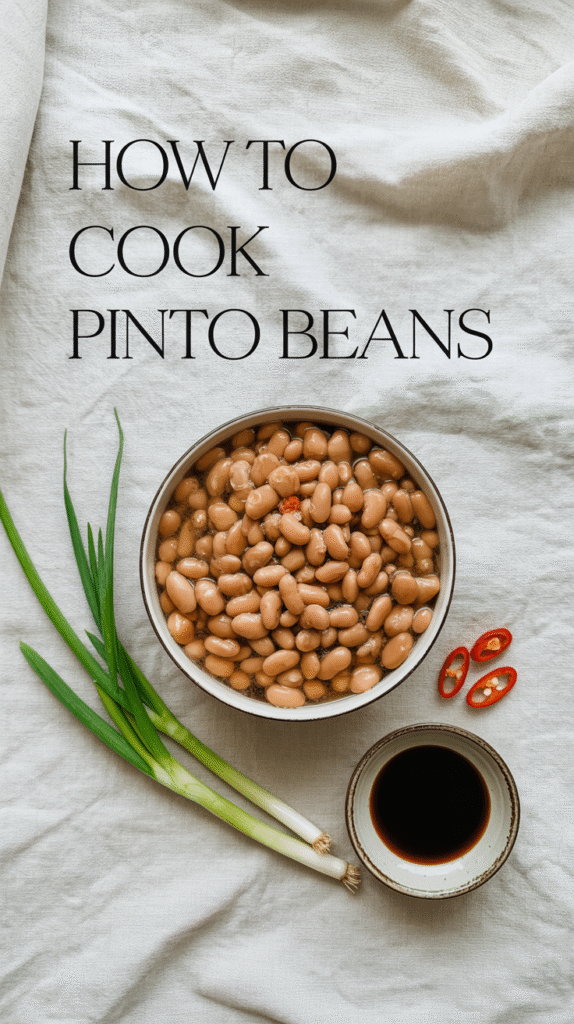
These recipes are only the start of how to cook with pinto beans. To inspire you more, do explore Food Network or AllRecipes for a wide range of recipes you can make with pinto beans. However, no matter if you decide to create chili, tacos, salad, or soup pinto beans are an awesome addition to your food.
Classic Pinto Bean Chili
This hearty chili is perfect for a cozy night in. The combination of spices, tomatoes, and pinto beans creates a comforting dish that is both filling and flavorful.
- Ingredients:
- 2 cups cooked pinto beans
- 1 onion, diced
- 2 cloves garlic, minced
- 1 bell pepper, chopped
- 1 can diced tomatoes
- 2 teaspoons chili powder
- 1 teaspoon cumin
- Salt and pepper to taste
- Instructions:
- Sauté the onion, garlic, and bell pepper in a pot until softened.
- Add the cooked pinto beans, diced tomatoes, chili powder, cumin, salt, and pepper.
- Simmer for 20-30 minutes, stirring occasionally.
- Serve hot, garnished with your favorite toppings like cheese or sour cream.
Pinto Bean Tacos
Tacos are a fun and tasty way to enjoy pinto beans. You can customize them with various toppings to suit your taste.
- Ingredients:
- 1 cup cooked pinto beans
- 8 small tortillas
- 1 avocado, sliced
- 1 cup chopped lettuce
- 1 tomato, diced
- Fresh cilantro for garnish
- Instructions:
- Warm the tortillas in a skillet.
- Top each tortilla with pinto beans, lettuce, tomato, and avocado.
- Garnish with cilantro and serve with lime wedges.
Pinto Bean Salad
This refreshing salad is perfect for a light lunch or as a side dish. The pinto beans add protein, while the vegetables provide essential nutrients.
- Ingredients:
- 1 can pinto beans, rinsed and drained
- 1 cup corn (fresh or canned)
- 1 bell pepper, diced
- 1/4 cup red onion, chopped
- 1/4 cup fresh cilantro, chopped
- Juice of 1 lime
- Salt and pepper to taste
- Instructions:
- In a large bowl, combine pinto beans, corn, bell pepper, red onion, and cilantro.
- Drizzle with lime juice and season with salt and pepper.
- Toss gently and serve chilled.
Pinto Bean Soup
A warm bowl of pinto bean soup is nourishing and easy to make. It’s a perfect way to enjoy the heartiness of pinto beans.
- Ingredients:
- 2 cups cooked pinto beans
- 1 onion, diced
- 3 carrots, sliced
- 2 celery stalks, chopped
- 4 cups vegetable broth
- 1 teaspoon thyme
- Salt and pepper to taste
- Instructions:
- In a large pot, sauté onion, carrots, and celery until softened.
- Add pinto beans, vegetable broth, thyme, salt, and pepper.
- Simmer for 30 minutes, then blend for a smoother texture if desired.
- Serve hot with crusty bread.
Cooking pinto beans can be deceptively simple but many make common mistakes that can alter the end result. Armed with an understanding of these pitfalls, you’ll be able to cook up a pot of pinto beans that are perfectly tender every time. Here’s a look at some pitfalls to avoid when you cook pinto beans.
Common Mistakes to Avoid When Cooking Pinto Beans
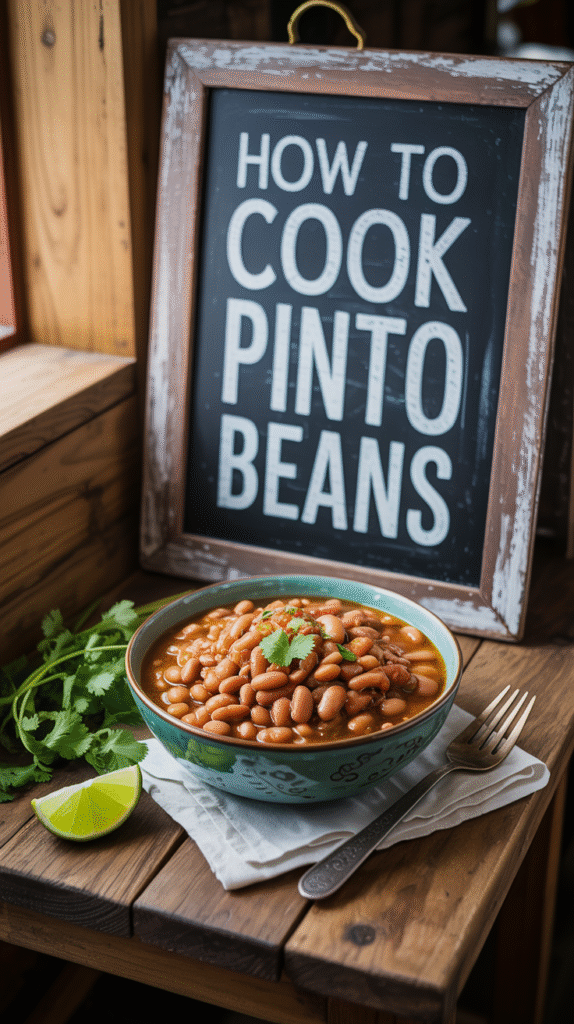
One of the most common mistakes is skipping the soaking step. Soaking pinto beans not only reduces cooking time but also helps in digestion as it breaks down some of the compounds that can cause discomfort. To soak your beans:
Overlooking the Soaking Process
Not adjusting cooking time according to beans’ age is a common mistake, too. Uncooked beans sit on shelves a long time and can lose their capacity to tenderize. As a rule of thumb:
- Rinse the beans to remove any dirt or debris.
- Soak in a pot of cold water for 6-8 hours or overnight.
- Drain and rinse again before cooking.
If you’re short on time, consider a quick soak method by bringing the beans and water to a boil for 2 minutes, then removing them from heat and letting them sit for an hour.
Not Adjusting Cooking Times
Another common mistake is not adjusting the cooking time based on the beans’ age. Dried beans can sit on the shelf for a long time and lose their ability to soften. As a rule of thumb:
| Bean Age | Recommended Cooking Time |
|---|---|
| Less than 1 year | 1 to 1.5 hours |
| 1-2 years | 1.5 to 2 hours |
| More than 2 years | 2 to 2.5 hours |
Always check for doneness, which means the beans should be tender but not falling apart.
Adding Acid Too Soon
One of the biggest mistakes many cooks make is adding tart ingredients — tomatoes or vinegar, for example — too soon in cooking. Acid can strengthen the skins of the beans, resulting in longer cooking time. For optimal results, add acidic ingredients after the beans are mostly cooked—typically in the last 15 to 20 minutes of cooking time.
Not Seasoning Early Enough
On the other hand, seasoning too late can make for bland beans. Salt should go in while cooking, but don’t add it too soon. If you do, it may impact the beans’ texture. A good rule of thumb is to hold off until the beans are tender, then season with salt to amp up the flavor. Begin with roughly 1 teaspoon per cup cooked beans, then adjust to taste.
Using Hard Water
Using hard water with high mineral content can also hinder the cooking process. The minerals can interact with the beans and stop them from softening. Filtered or distilled water should be used to avoid this situation when cooking your pinto beans. It can really impact texture.
Ignoring Storage Tips
Storing your cooked pinto beans properly is essential after cooking them. Most people store beans the wrong way, which can cause spoilage or off-flavors. Allow the clue to cool before storing it in an airtight container. Refrigerate for up to a week or freeze for longer storage. For freezing, transfer beans to freezer bags, squeezing as much air out as you can.
Failing to Experiment with Flavors
Pinto beans are versatile and absorb the flavors of spices and herbs quite well. Bland results can come from failed experiments. Don’t be shy about using garlic, onion, cumin or bay leaves when cooking. You could also add a ham hock or some bacon for depth. Just be sure to add these ingredients early so the flavors can become evenly distributed throughout.
Steer clear of these common pitfalls, and your pinto beans will be hitting new highs in delectable flavor. Soak beans properly, consider their age when cooking them and season wisely for good results. Get more cooking tips & recipes for pinto beans at Family Recipes or Love and Lemons for unusual ideas.
The History and Cultural Significance of Pinto Beans in Cuisine
Pinto beans (Phaseolus vulgaris) have an earthnutty flavor and creamy texture and a history rich in culture all over the world. Chickpeas are especially important in Latin American, U.S., and south-central Asian cuisines. In the centuries since, they have grown from simple crops to dietary staples in many homes across the world, as both food and culture.
The Origins of Pinto Beans
Pinto beans (Phaseolus vulgaris) originated in the Americas. The Andes region of South America is believed to be the cradle of their cultivation, having been cultivated more than 7,000 years ago as per archaeological evidence. The Aztecs and Mayans, among other early Mesoamericans, grew them with maize and squash through a technique called the “Three Sisters” planting method. It turns out that this companionship was beneficial too, promoting biodiversity and providing farmers with a range of nutrients in one harvest.
Cultural Importance in Latin America
Pinto beans are a staple of many traditional diets across Latin America. They are often included in meals such as refried beans, burritos and chili con carne. The bean occupies pride of place at many family gatherings and national celebrations.
Here are some cultural significances:
- Nutrition: Pinto beans are rich in protein, fiber, and essential nutrients, making them a vital source of sustenance for many communities.
- Social Bonding: Meals featuring pinto beans often serve as opportunities for families and friends to gather together.
- Regional Variations: Different Latin American countries have their own traditional recipes centered around pinto beans, contributing to regional identities.
Pinto Beans in American Cuisine
Pinto beans traveled with settlers as they moved westward in the United States. These days, you’re most likely to find them served with Southwestern-style food or as part of a Tex-Mex meal. A dish called chili con carne that commonly included pinto beans made a prominent appearance on the cowboy cookout menu and has since become a comfort food beloved around the country.
In addition, the pinto bean became an inexpensive source of protein during the Great Depression and saw a spike in popularity. The resilience and resourcefulness these people embodied resonated with the American character, and they became symbols of all that was good during that period.
Health Benefits of Pinto Beans
Pinto beans are not just versatile in the kitchen, but they also offer numerous health benefits:
| Benefit | Description |
|---|---|
| High in Fiber | Promotes digestive health and may aid in weight control. |
| Rich in Protein | An excellent source of plant-based protein, crucial for muscle repair and growth. |
| Heart Health | May contribute to lower cholesterol levels and a reduced risk of heart disease. |
| Antioxidants | Contains compounds that help fight inflammation and oxidative stress. |
Modern Culinary Uses
Modern pinto bean recipes go beyond the usual home-style dishes. Innovative preparations are being explored by chefs and home cooks alike:
- Pinto Bean Burgers: A plant-based alternative using mashed pinto beans as a primary ingredient.
- Soups and Stews: Adding pinto beans enhances the texture and nutritional value of hearty soups.
- Salads: Cold salads often feature pinto beans tossed with fresh veggies and vinaigrette for a nutritious quick meal.
Pinto beans remain a popular and versatile food, as society moves toward sustainable eating habits. Food is not only a source of nourishment, its also an expression of diversity and culinary tradition around the world.
For more information on the nutritional benefits of pinto beans and recipes, you can explore Healthline or discover various recipes at AllRecipes.
Conclusion
While pinto beans are a great versatile and inexpensive ingredient, they also provide significant nutrition benefits to your diet. Rich in protein, fiberStands and countless vitamins, these beans can beautify your dishes while benefiting your health. Once you begin to play around with cooking pinto beans, you’ll find all sorts of wonderful recipes that embrace their hearty flavor—from savory stews to tangy bean salads.
But don’t forget to consider the common ground traps that can diminish your dish. Soaking and cooking properly makes all the difference with texture and flavor. Following a step-by-step approach like we’ve detailed will make sure that if you avoid these mistakes, your pinto beans are a cooking success every time.
Pinto beans aren’t just delicious — they’re also a humble staple of cultures around the world. Learning their history and importance can enhance your appreciation for this ordinary food. Pinto beans are still celebrated for their versatility and heartiness, from traditional fare to more modern takes.
You are beginning your adventure on cooking and traveling, embracing the colorful world of pinto beans. Whether you’re making a hearty meal for the family or experimenting with a new recipe, these beans are bound to be nutritious and delicious at whatever table you serve them. Explore the lots of ways that pinto beans can be used in your kitchen and make more often!