


Eggs are among the most versatile and nutritious foods on the planet. There are different ways to prepare them and each offers its own wonderful flavor/different-ways-to-cook-eggs texture experience. Here are a few common techniques for preparing eggs that you can easily embark on at home.
Boiling Eggs
One of the easiest methods is to boil them. You can boil the eggs for soft-boiled or hard-boiled depending on your preference. Here’s how to do it:
Soft-Boiled: Add eggs to boiling water for about 6–7 minutes. Withdraw them and cool them under iced water to arrest the cooking.
Hard-Boiled: Boil eggs for 9-12 minutes for a fully cooked yolk. You can then cool them for easy peeling.
Frying Eggs
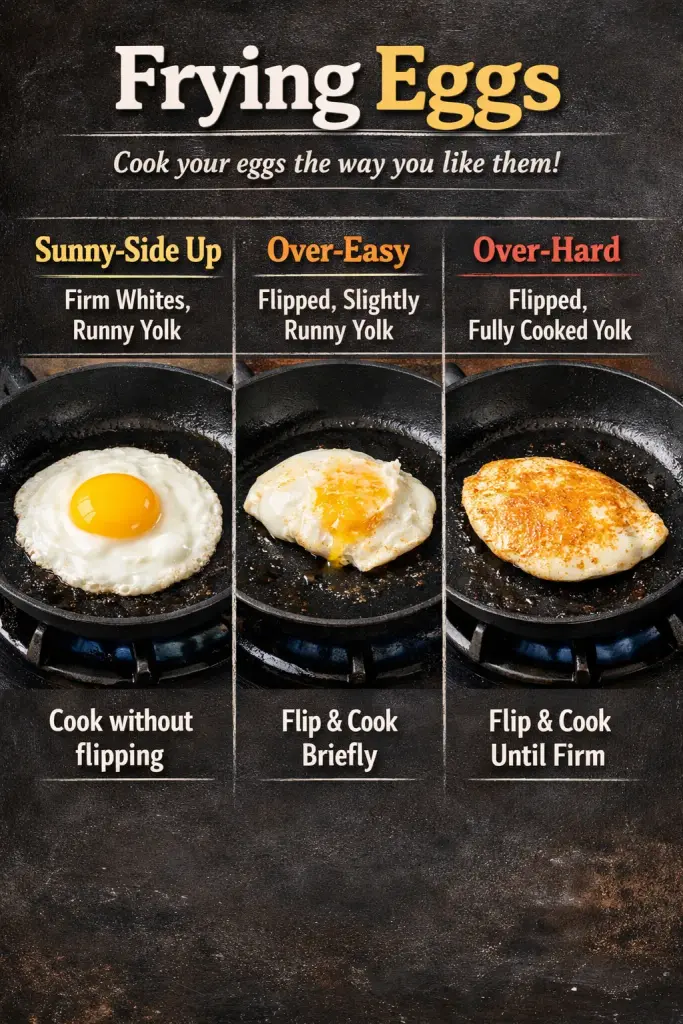
There are different ways to fry eggs, so you can choose how firm or runny you want your yolks.
Sunny-Side Up: Break an egg into a sizzling hot skillet without flipping. Cook until the white is firm but the yolk is runny.
Over-Easy: Cook the egg sunny-side up, then carefully flip and cook for another minute for a slightly runny yolk.
Over-Hard: Turn the sunny-side-up egg over and cook until the yolk is completely set.
Scrambling Eggs
Which brings us to scrambled eggs — the ideal breakfast in a hurry. Here’s an easy method:
Beaten eggs in a bowl with a pitch of salt and pepper.
Melt a little butter in a non-stick skillet over medium heat.
Add in the eggs and give them a gentle stir with a spatula until they start to set. Remove from the heat to avoid overcooking.
Baking Eggs
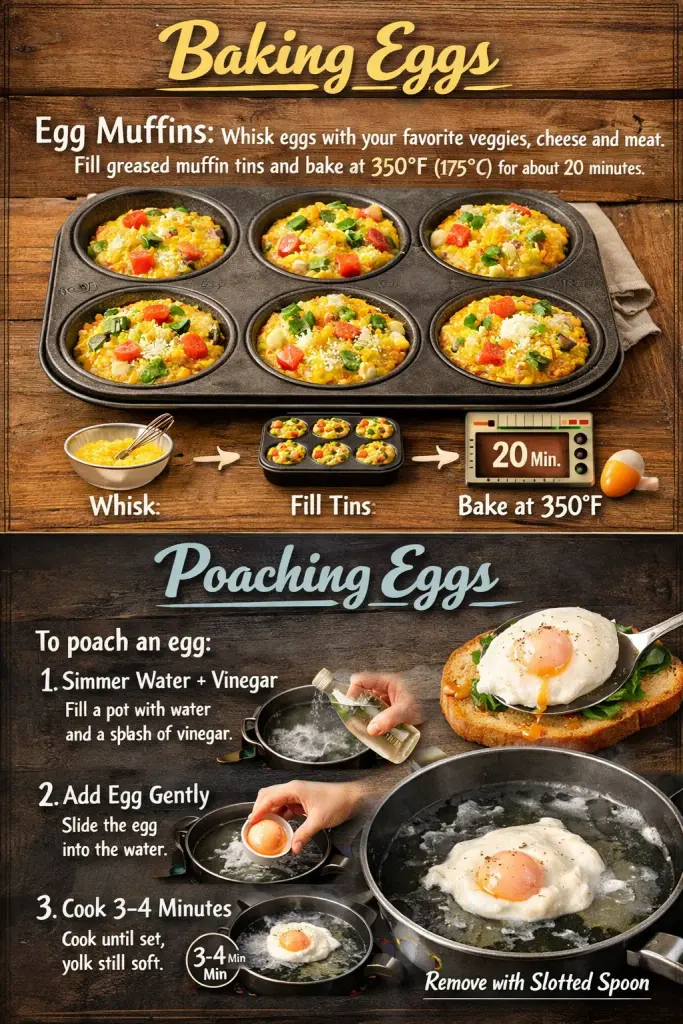
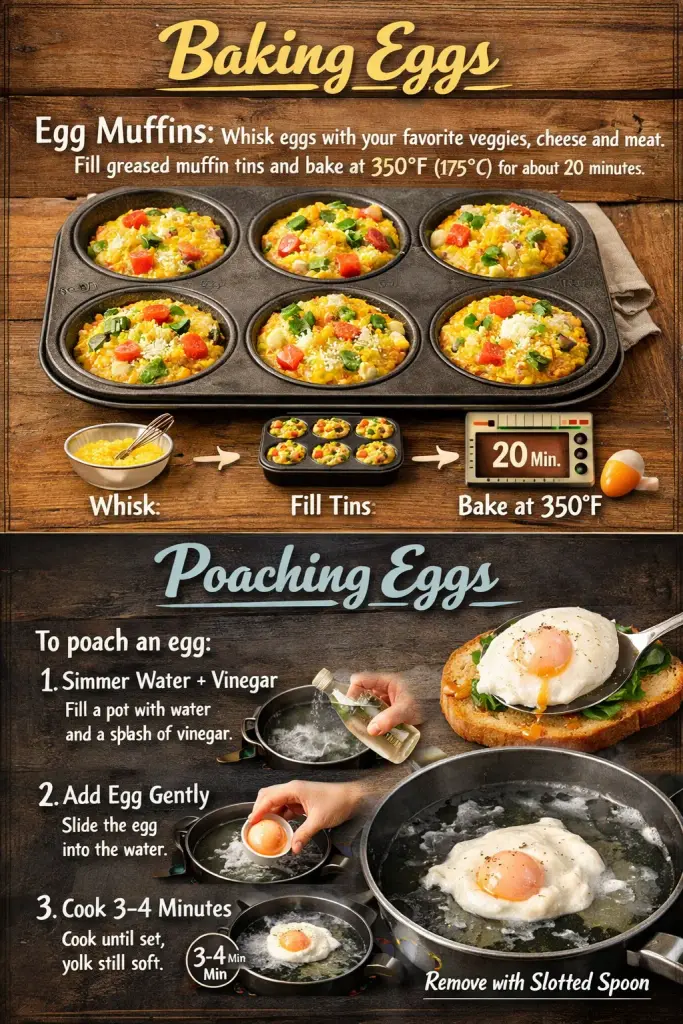
Baking is a good method of cooking when you want to serve more than two people. Eggs can be baked in muffin tins or casseroles. Here’s a simple idea:
Egg Muffins: Whisk eggs with your favorites veggies, cheese and meat. Fill greased muffin tins and back at 350 degrees F (175 C) for about 20 minutes.
Poaching Eggs
Poaching is a gentle cooking method for eggs that results in soft, tender texture. To poach an egg:
Fill a pot with water and bring it to a very gentle simmer, adding in a splash of vinegar.
Break an egg into a small bowl and carefully slide it into the simmering water.
Cook for 3-4 minutes until set but the yolk is still soft. Remove with a slotted spoon.
Cooking Eggs in Other Styles
Here are a few more ways to jazz up your egg-based dishes:
Omelet: Just beat eggs and pour them in a hot skillet. Add fillings such as cheese, vegetables or meats, then fold.
Shakshuka: Poach eggs in spicy tomato sauce This flavorful Middle Eastern dish.
Cloud Eggs Whip egg whites until fluffy, mound them on a baking sheet and bake. Then mix in the yolk and bake some more.
Tips for Perfect Eggs

Here are some tips that I hope will help you get the most out of your eggs when you cook:
Freshness is key when it comes to egg-based recipes, since freshness leads to a superior flavor and texture.
Make sure the cooking temperature is low to prevent rubbery or tough eggs.
Season eggs before cooking for more flavor.
Soft, hard, scrambled and poached — there might be a different way to cook an egg that you haven’t tried and now have the chance to taste while learning how to create your favorite type of egg dish. Find more tips and recipes at Eggs. ca, log in and for eggs on road.
Eggs: Nutrition and Health Benefits
Eggs are a super versatile food with an amazing nutritional profile. But they also so nutritious and can have many health benefits. Here are some of the benefits you can enjoy from eating eggs regularly for your overall well-being:
Rich Source of Nutrients
Eggs are sometimes referred to as a “complete protein” because they’re loaded with all the essential amino acids that your body needs. A large egg has about:
| Type of Egg Preparation | Gut Health Benefits | Nutritional Benefits |
|---|---|---|
| Boiled | Provides protein and probiotics if paired with fermented sides. | 6 grams of protein, Vitamin D (for bone health support), Vitamin B12 (for nerve function), Choline (for brain health). |
| Scrambled | Rich in protein, easy to digest when cooked lightly. | 6 grams of protein, Vitamin D, Vitamin B12, Choline, Omega-3 fatty acids (heart health). |
| Poached | Gentle on the stomach, rich in protein, low in fat. | 6 grams of protein, Vitamin D, Choline, Omega-3 fatty acids. |
| Fried | Provides protein and fat; use of healthy fats can support digestion. | 6 grams of protein, Vitamin D, Choline, Omega-3 fatty acids, Boosts eye health. |
| Baked (Shakshuka, Frittatas) | Packed with fiber and antioxidants if vegetables and spices are included, promoting healthy digestion. | 6 grams of protein, Vitamin D, Vitamin B12, Omega-3 fatty acids, Boosting eye health. |
Eggs also contribute to healthy eyesight. They have lutein and zeaxanthin, two antioxidants that can help protect against age-related macular degeneration and cataracts. Your body absorbs these carotenoids better with the fat in yolks.
Helping with Weight Management
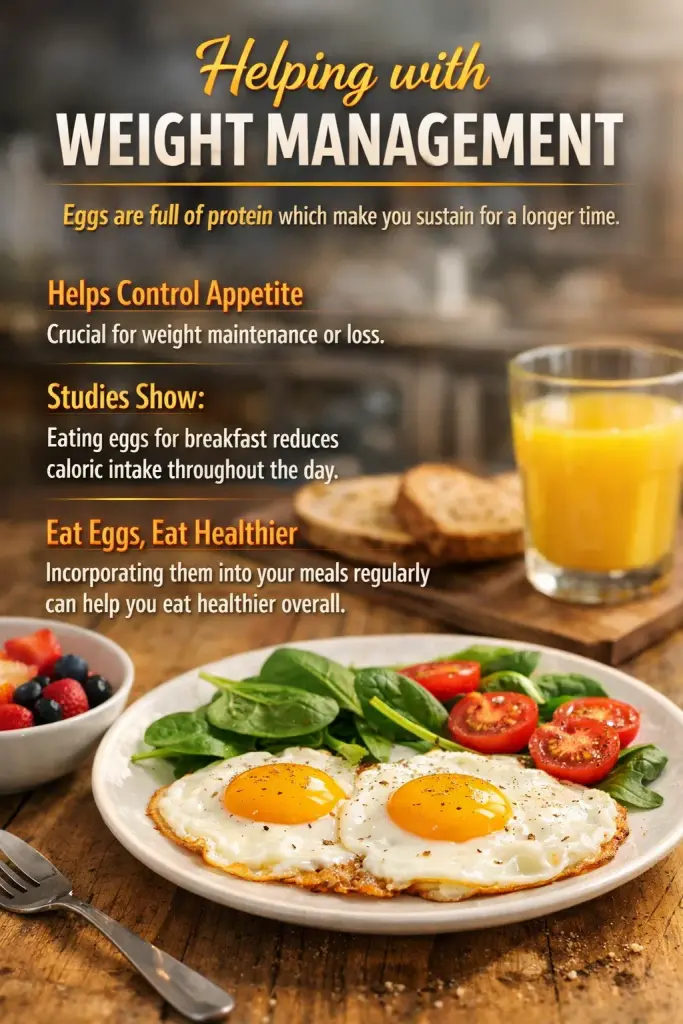
Eggs are full of proteins which make you sustain for a longer time. That can help with appetite control, which is crucial for weight maintenance or loss. Studies show that eating eggs for breakfast reduces caloric intake throughout the day. Incorporating them into your meals regularly can help you eat healthier overall.”
Supporting Brain Function
Choline, abundant in eggs, is essential for brain health and cognitive function. This also is important to the production of neurotransmitters, which are necessary for balance in mood, memory and general mental function. Choline is also thought to be beneficial for infant brain development, when consumed by mothers during pregnancy and sucking babies in early childhood.
Improving Heart Health
Fortifying studies show eggs can elevate heart health. They increase HDL (high-density lipoprotein),-or the “good” cholesterol. Although eggs do have cholesterol, they don’t seem to raise blood cholesterol levels in most people. The secret is eating them in moderation and as part of a healthy diet.
Quick to Cook in a Number of Different Ways
Eggs have one of the biggest advantages of all: they are versatile. There are endless ways to prepare them, making it simple to incorporate them into your diet. Here are some different methods:
| Type of Egg Preparation | Gut Health Benefits |
|---|---|
| Boiled | Provides protein and probiotics if paired with fermented sides. |
| Scrambled | Rich in protein, easy to digest when cooked lightly. |
| Poached | Gentle on the stomach, rich in protein, low in fat. |
| Fried | Provides protein and fat; use of healthy fats can support digestion. |
| Baked (Shakshuka, Frittatas) | Packed with fiber and antioxidants if vegetables and spices are included, promoting healthy digestion. |
Eggs are positively affect digestion. They are also a good source of probiotics and are often prepared as part of fermented dishes. Probiotics help maintain a healthy balance of gut bacteria, which is important for digestion and immune system support.
Enhancing Skin and Hair Health
Eggs: The nutrients in eggs work wonders for the skin and hair. Rich in proteins which repair body cells, vitamins like A, D and E that keep skin healthy and promote hair growth. Eggs can maintain a healthy and glowing skin and lustrous hair, when consumed regularly.
When to Consider Moderation
Eggs can be a healthy food, although in moderation and for those with certain health issues. Those who have cholesterol-related issues should speak to their healthcare provider about an acceptable intake level for them. For optimal health, a balanced diet of many foods is always recommended.
| Type of Egg Preparation | Calories | Protein (grams) | Fat (grams) |
|---|---|---|---|
| Boiled | 77 | 6.3 | 5.3 |
| Scrambled | 91 | 6.7 | 7.0 |
| Fried | 90 | 6.5 | 7.0 |
Consumption of eggs brings incredible health benefits to your body that can unleash both mental and physical potential in you. So whether you’re working on eye health, brain function or weight management, eggs can help in your strata. For more about the health benefits of eggs, check out Healthline or Egg Nutrition Center.
Egg Dishes From Around the World That Are Anything but Basic
Eggs are a universal food, appearing in myriad culinary traditions around the world. Eggs can be prepared in countless imaginative ways, varying by region, making them a very versatile food that reflects local culture and flavors. Here are a few delicious egg dishes from different countries that demonstrate the many creative ways people love to eat this humble food.
Shakshuka
Shakshuka, a hearty dish of poached eggs in spicy tomato sauce — which originated in North Africa but became popularized in the Middle East. The sauce generally consists of bell peppers, onions and spices like cumin and paprika. It’s often served with crusty bread to mop up the delicious sauce.
Spanish Tortilla
This traditional Spanish dish, also called tortilla española, is made with eggs cooked with potatoes and onions. The mixture is sautéed until soft, then mixed with beaten eggs to form a thick, spiced omelet that can be eaten warm or cold. Have it as a tapa or main dish.
Bibimbap
Bibimbap, from Korea, means “mixed rice,” and is usually topped with a fried egg. Banchan are small servings of fermented vegetables, marinated meat and gochujang (Korean chili paste) for seasoning. Mixed in, the runny yolk of the egg adds richness that brings all the ingredients together.
Huevos Rancheros
A traditional Mexican breakfast, huevos rancheros consists of fried eggs placed on corn tortillas and covered in a spicy tomato and chili salsa. For added flavor and texture beans, avocado, and sour cream are often included, making it quite filling.
Mene men
Menemen is a Turkish dish of scrambled eggs mixed with tomatoes, green peppers and spices. The ingredients are sautéed until soft, after which the eggs are incorporated, making for a dish often eaten with crusty bread. It’s a popular breakfast choice in Turkey.
Oeufs Cocotte
This French dish, sometimes called baked eggs, involves putting the eggs into small ramekins with cream and whatever else you want — typically herbs or cheese or vegetables. The ramekins are baked in a water bath until the eggs are barely set. It’s a gorgeous dish that’s ideal for brunch or light dinner.
Egg Curry
Egg curry is a common comfort food in India. Boiled eggs are simmered in a flavorful and spicy gravy prepared with tomatoes, onions, and an assortment of spices such as turmeric, coriander, and garam masala. It is best enjoyed with either rice or naan as a comfort meal.
Sunnyside Up with Pesto
This simple but adventurous dish pairs the classic sunnyside-up egg with fresh pesto. The vibrant green flavor of the basil pesto offsets the richness of the egg yolk. Serve alongside toast, or roast it with other vegetables for a more substantial meal.
Tracey — with so many particular ways to cook eggs that the only limit is imagination. Sample a few of these globally inspired dishes to discover the creativity and diversity that you can find when cooking with eggs. Here are a few more places to learn and get recipes:
Serious Eats Egg Recipes
Food Network – Eggs
BBC Good Food – Egg Recipes
Trying different dishes can unlock lots of flavors and textures, and eggs are a great way to add diversity to any meal. No matter if you like them spicy, savory or even sweet, there’s an egg dish to please your taste buds from cultures around the globe.
Fixing Your Eggs: What You May Be Getting Wrong
Cooking eggs can be a highly creative process, but even the most accomplished chefs are not immune to errors. Whether you’re scrambling, boiling or frying, knowing these mistakes — and how to fix them — can mean the difference between a perfect egg and a passable one.
Overcooking Scrambled Eggs
Overcooking is perhaps the most common crime against scrambling eggs. Cook them too long, and they get dry and rubbery. To avoid this:
Cook over medium, letting the eggs thicken gently.
Take them off the heat when still a touch undercooked. Their residual heat will continue cooking them.
Add a splash of milk or cream before cooking, for creaminess.
Inconsistent Boiled Eggs
If you like boiled eggs, you might have trouble getting that perfect yolk. There is too soft and there is too hard, and these two can differ greatly. Follow this simple method:
Put eggs into a saucepan and cover with cold water.
Bring to a boil, cover, then turn off heat. Let them sit for:
| Cooking Method | Common Mistakes | Solutions |
|---|---|---|
| Scrambled | Overcooking | Cook low and take off a little underdone. |
| Boiled | Inconsistent yolk | Follow time for desired doneness. |
| Fried | Sticky eggs | Use a non-stick skillet, heat oil/butter. |
| Poached | Wrong water temperature | Gentle simmer, add vinegar. |
| Soft-boiled | Undercooked or overcooked | 4-5 minutes for soft-boiled, chill in ice water to halt cooking. |
| Medium-boiled | Inconsistent yolk | 6-8 minutes for medium-boiled, chill in ice water. |
| Hard-boiled | Overcooked yolk | 9-12 minutes for hard-boiled, chill in ice water. |
| Fried Eggs (Poorly) | Overcooking, sticking | Use a non-stick skillet, heat oil/butter, cook on low heat. |
Fried eggs can be tricky. They either fall apart, stick to the pan or break the yolk. Who Are These Perfect Eggs and How Do You Fry Them?
Grease a non stick frying pan and allow it to heat over medium fire.
Add a splash of butter or oil and let it get hot enough to sizzle.
Break the eggs into a small bowl and crack them gently so that the yolks aren’t broken, and fry them until their whites are set.
Incorrect Temperature for Poached Eggs
Poaching eggs can cause frustration. Too hot water toughens the egg; too cool, and they don’t properly set. To poach eggs perfectly:
Bring the water to a gentle simmer (don’t boil it), adding a splash of vinegar, which will help the egg white firm.
Break the egg into a small dish before gently slipping it into the water.
4 minutes for a soft and runny yolk.
Neglecting Seasoning
Seasoning is everything when it comes to the flavor of your eggs. Here are quick tips:
Season with salt and pepper just before cooking for even distribution.
Try herbs like chives, parsley or dill.
For something different, add spices such as paprika, turmeric or cumin.
Saving Space for Cooking Techniques
| Cooking Method | Common Mistakes | Solutions |
|---|---|---|
| Scrambled | Overcooking | Cook low and take off a little underdone. |
| Boiled | Inconsistent yolk | Follow time for desired doneness. |
| Fried | Sticky eggs | Use a non-stick skillet, heat oil/butter. |
| Poached | Wrong water temperature | Gentle simmer, add vinegar. |
With these common mistakes and their solutions in mind, you can nail your eggs every time. Cooking is more than following a recipe; it’s understanding what the techniques are, and how will they change your results. For additional tips for becoming an expert egg cooker, check out Egg Farmers of Canada or AllRecipes Egg Dishes.
With some practice and a bit of attention to detail, you’ll find that mastering your eggs can be easy and even enjoyable. However, get into the process, and will story behind that plate of delicious food!
Egg Cooking Methods from A to Z: For Breakfast, Lunch or Dinner
Eggs are an all-purpose ingredient to elevate any meal you make throughout the day. There are infinite ways to cook eggs, from breakfast to dinner. Knowledge of the various methods can help you unleash your culinary creativity and enjoy a variety of flavors and textures. To inspire your next meal, here are a handful of popular egg-cooking methods.
Boiled Eggs
Boiling is the easiest way to cook eggs. You can customize the doneness to your liking. These are the few common types of boiled eggs:
Soft-Boiled: 4-6 minutes of cooking time. The whites will be fully cooked and the yolk still runny.
Medium-Boiled: 7 to 9 minutes of cooking. The yolk takes on a creamy but slightly set quality.
Hard-boiled: Cook for 10 to 12 minutes for a completely set yolk. Good for salads, or as a snack.
Note: If you want to make hard-boiled eggs that will peel easily, use a few days-old eggs and plunge them into ice water as soon as they’re done boiling.
Scrambled Eggs
Scrambled eggs are a breakfast classic. If you want fluffy scrambled eggs, here’s how:
In a bowl, crack in the eggs and whisk with a pinch of salt.
In a non-stick frying pan, heat some butter or oil over medium heat.
Add the eggs and gently stir with a spatula, cooking until just set.
You can also mix in other ingredients, like cheese or green onions or tomatoes, to give flavor and texture.
Fried Eggs
Fried eggs are often cooked sunny side up, over-easy, over-medium or over-hard. Here’s how to do it:
Sunny Side Up: Cook over low heat until the whites are set but yolks remain runny.
Over-easy: Cook one side, then flip delicately and cook for another minute until some yolk still runs.
Over-Medium: Similar to over-easy, but more time on the heat yields a yolk that’s a little firmer.
Over-Hard: Cook until both sides are set and yolk is fully cooked.
Baked Eggs
Eggs baked has a world of possibilities. You can make something like shakshuka or egg muffins:
Shakshuka: Poach eggs in a spicy tomato sauce. Serve it with crusty bread.
Egg Muffins: Beat eggs together with veggies and cheese, pour them into muffin tins, then bake until set.
Omelets
A classic omelet can be filled with a bit of cheese, mushrooms or spinach. To make an omelet:
Whisk eggs together in a bowl, adding salt and pepper.
Pour into a hot skillet and stir gently.
Add your choice of fillings.
When the eggs nearly set, fold the omelet in half and serve.
Poached Eggs
Poached eggs display a lot of delicacy in their texture. To poach an egg:
Heat a pot of water to a gentle simmer, and add a dash of vinegar.
Break an egg into a small bowl. Make a whirlpool in the pot, then slide the egg into the middle.
Soak for about 3-4 minutes, then lift out with a slotted spoon.
For an added touch of elegance, serve poached eggs on toast or in a salad.
Eggs in Lunch and Dinner Dishes
Eggs can also take center stage in lunch and dinner dishes. Some ideas include:
Frittata: Italian dish prepared by adding vegetables and cheese to eggs and baking.
Egg Fried Rice: Stir-fried rice, vegetables and scrambled eggs.
Egg Salad Hard-boiled eggs chopped and mixed with mayonnaise and seasonings, served as a sandwich or over greens.
And with all these cooking methods, you can eat eggs any time of day. Whether you like them soft-boiled or baked, there’s a preparation for every palate.
To discover more egg recipes that show ingenuity, check out Eggs. ca for inspiration!
Conclusion
Eggs are an incredibly versatile and nutritious food that can be incorporated into almost any meal of the day. The methods and tips we explore below show just how many ways there are to cook eggs, from scrambling or boiling them to poaching or baking them. With each technique, you get different flavors and textures giving you the option to serve eggs in many ways.
Recognizing the health benefits of eggs also makes this food even more lovable. Nutrient-dense, eggs provide protein, vitamins and critical nutrients that promote general wellness, all in a simple and inexpensive package. Eggs are a great value, meaning you can get your nutrition fix without investing in fancy supplements.
There’s something about egg dishes from the world over that can punch up meals at home. Be it a classic Spanish tortilla or a savory Japanese omelet, these recipes show us that eggs can be palates of culinary creativity. different-ways-to-cook-eggs You can please your family and friends with international flavors.
But whatever you do to cook them, avoiding common pitfalls is critical to nailing your eggs. Get the perfect egg every time with the right cooking times and techniques. As with anything, the more you practice and benefit from these remedies, the better your eggs will get.
The wonderful thing about eggs is that they are useful in any meal. From breakfast to dinner, there’s an egg on the menu for every occasion, so you’ll never be at a loss for ideas. Celebrate the multitude of ways to cook an egg, and how they can inspire your own cooking. This basic but utterly delightful ingredient never fails to bring happiness and pleasure.