



Okra, or lady’s finger, is a great vegetable that makes various dishes come together with its unique taste and feel. If you want to know how to cook okra, you came to the right place. This guide will walk you through different techniques and helpful tips for preparing okra, deliciously.
Choosing Fresh Okra
Before you start cooking, though, choosing the right okra is key. Fresh okra will be firm and tender, bright green in color. Steer clear of any that are large or have brown spots; they may taste tough, or bitter. For optimal freshness, shop at local farmers’ markets.
Popular Cooking Methods for Okra
There are several methods to cook okra. Here are some popular ones:
- Sautéing: This method retains the okra’s crisp texture.
- Boiling: A quick way to prepare okra, especially for soups.
- Frying: This brings out a crispy outer layer.
- Roasting: Adds depth to the flavor while keeping it healthy.
- Stewing: Okra adds thickness and richness to stews and gumbos.
Sautéing Okra
To sauté, wash the pods and cut them into ½ inch pieces. In a skillet, heat a tablespoon of oil over medium heat. Add the okra and sauté for 10 minutes or so, stirring regularly. You can add salt, pepper and spices such as cumin or paprika to say enrich the taste. This is a great way to make it as a quick side dish!
Boiling Okra
If you’re including okra in soups or stews, boiling is an effective preparation method. Bring a pot of water to boil, then add the entire pods or cut-up pieces. Boil for 5 to 7 minutes until it becomes tender. Drain and toss in your favorite soup recipe, like okra and tomato soup.
Frying Okra
Fried okra is a beloved Southern dish that’s crunchy and flavorful. Here’s how to do it:
- Slice okra into 1-inch pieces.
- Coat the pieces in a mixture of cornmeal, flour, salt, and pepper.
- Heat oil in a deep skillet to 350°F (175°C).
- Fry the okra in batches until golden brown, about 3-4 minutes.
- Drain on paper towels and serve with dipping sauce.
Roasting Okra
Roasted, okra develops a smoky taste. Accessibility links Get a Copy of the Times Preheat your oven to 425 F (220 C). Coat whole or halved okra with olive oil, salt and pepper. Place them in a single layer on a baking sheet. Roast 15-20 minutes until tender and slightly charred. This technique produces a tasty snack or side!
Stewing Okra
Okra’s natural sliminess is perfect for thickening soups and gumbos. To prepare a basic okra stew:
- In a pot, heat oil and sauté onions, garlic, and bell peppers until soft.
- Add diced tomatoes and vegetable broth.
- Include sliced okra and other vegetables. Season with your favorite herbs.
- Simmer for 25-30 minutes until all ingredients are well combined.
Tips for Cooking Okra
To make your okra dishes even better, consider the following tips:
- Always wash okra to remove any dirt before cooking.
- Cutting okra will release its slime; if you want less sliminess, cook it whole.
- Pair your okra with complementary flavors, such as tomatoes or corn.
- Add spices early in the cooking process to enhance flavors.
For a deeper exploration of okra recipes and its health benefits, check out Healthline.
A few techniques can make cooking okra simple and straightforward. Whether you prefer to sauté, boil, fry or roast or stew, there is a method for you. You will soon discover that this veggie leads to some serious deliciousness!
The Nutritional Benefits of Okra
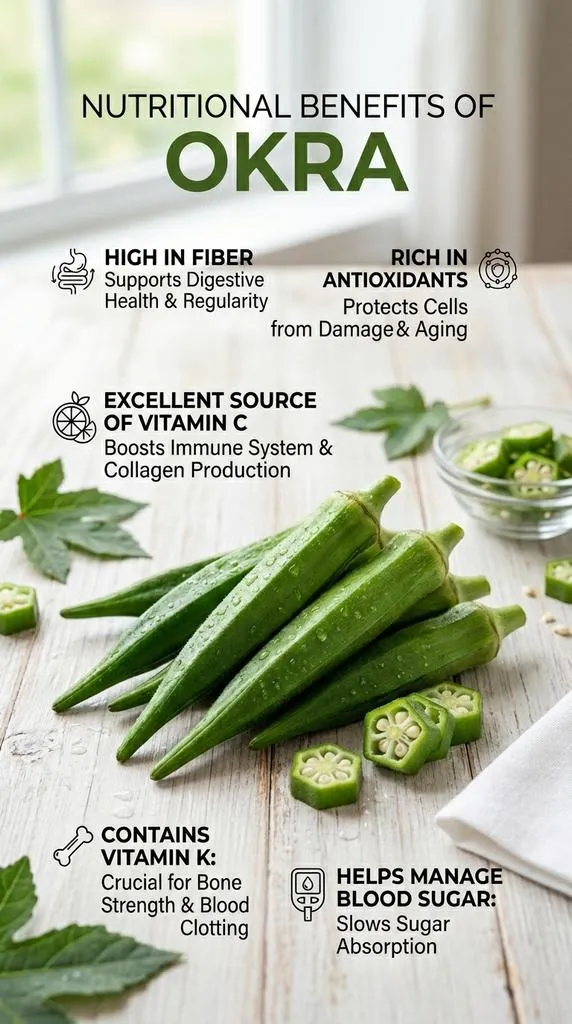
Okra is a highly versatile vegetable that is packed with nutrients. Besides its unique flavor and texture, this green pod is rich in vitamins and minerals. Let’s take a look at what makes this vegetable so good for your health.
Nutritional Composition
Okra is a fantastic source of dietary fiber, vitamins A, C, and K, as well as several key minerals. Here’s a breakdown of its nutritional profile per 100 grams:
| Nutrient | Amount |
|---|---|
| Calories | 33 |
| Protein | 2.0 g |
| Carbohydrates | 7.5 g |
| Fiber | 3.2 g |
| Fat | 0.2 g |
| Vitamin C | 23 mg |
| Vitamin K | 31.3 mcg |
| Folate | 60 mcg |
| Magnesium | 57 mg |
Health Benefits
Okra into your diet can provide numerous health advantages. Below are some noteworthy benefits:
- Aids Digestion: The high fiber content in okra promotes healthy digestion and helps prevent constipation.
- Supports Heart Health: The vegetable contributes to heart health by lowering cholesterol levels and maintaining healthy blood pressure.
- Boosts Immune System: With a significant amount of vitamin C, okra plays a vital role in enhancing your immune function.
- Regulates Blood Sugar: Studies suggest that okra may help control blood sugar levels, making it a great choice for individuals with diabetes.
- Promotes Bone Health: The vitamin K and calcium found in okra are essential for maintaining strong bones.
- Reduces Inflammation: The antioxidant properties of okra may help in reducing inflammation throughout the body.
How to Incorporate Okra Into Your Diet
There are many delicious ways to enjoy okra. Here are a few simple ideas:
- Stir-fry with your favorite vegetables for a quick and healthy meal.
- Add slices to salads for added texture and nutrients.
- Cook it with rice and spices for a flavorful dish.
- Pickle it for a tangy side dish or snack.
By including okra in your meals, you not only enjoy its unique taste but also reap its health benefits. A simple roasted or sautéed dish can be a heart-healthy addition to your diet.
Purchasing and Storing Okra
When purchasing okra, choose pods that are bright green and firm. Don’t buy okra with brown spots or those that feel slimy, signs they’re past their prime. To store okra, you can keep it in the refrigerator (be sure to wrap it inside a paper bag) for no longer than three days; moisture will make it spoil faster.
You can learn more about the nutritious benefits of okra at Healthline, or check out Medical News Today. Incredible resources to learn all about the benefits and uses of this fantastic vegetable.
Okra is not just a tasty addition to your food. With an outstanding nutritional profile, it is a mammoth of health potential. Whether you sauté, steam or eat it raw, okra is a step in the right direction on your road to a healthful life.
Creative Recipes Featuring Okra

Okra is a versatile vegetable that works well in many dishes, because it can deliver both flavor and nutrition. If you wanted the most creative way to eat okra, you’ve come to the right place! Here are some bright, inventive recipes to enjoy this unique vegetable at its most.
1. Spicy Okra Stir-Fry
This quick and easy stir-fry brings out the natural flavor of okra while adding a spicy kick that will excite your palate. You will need:
- 1 pound fresh okra, sliced
- 2 tablespoons olive oil
- 1 onion, thinly sliced
- 2 cloves garlic, minced
- 1 teaspoon red pepper flakes
- Salt and pepper to taste
In a large pan, on medium heat, warm the olive oil. Add the onions and garlic, cooking until softened and translucent. Add the okra and red pepper flakes, and sauté for 5 to 7 minutes until the okra is tender. Season with salt and pepper, and serve. Serve over rice or quinoa!
2. Crispy Baked Okra Fries
If you’re looking for a healthier alternative to traditional fries, look no further than baked okra fries. These are easy to prepare and packed with flavor:
- 1 pound fresh okra, cut into quarters
- 1 cup cornmeal
- 1 teaspoon garlic powder
- 1 teaspoon paprika
- Salt to taste
- Olive oil spray
Step 1: Preheat oven to 425°F (220°C) In a tagine: combine cornmeal, garlic powder, paprika, and salt in a bowl. Throw the okra in the mixture and mix well. Put them on a baking sheet and spray with olive oil. Return to oven and bake 20-25 minutes, or until golden brown. These crispy little guys are awesome with some dipping sauce of your choice!
3. Okra and Tomato Stew
This hearty stew is perfect for a cozy dinner. It’s full of vibrant flavors and can be served alone or over rice. Here’s what you’ll need:
- 1 pound fresh okra, sliced
- 1 can (14 oz) diced tomatoes
- 1 onion, chopped
- 1 bell pepper, chopped
- 2 cups vegetable broth
- 2 teaspoons cumin
- Salt and pepper to taste
As you know, this one only thickens up by using a large pot that gets the onions and bell pepper soft. Add the sliced okra and cook for a couple of minutes. Add the diced tomatoes, vegetable broth and cumin. Bring to a boil, then lower the heat and simmer for 30 minutes. Add salt and pepper to taste, and dig into this cozy dish!
4. Okra Gumbo
If you’re looking for a classic Southern dish, okra gumbo is the way to go. This rich and flavorful dish is sure to impress:
- 1 pound fresh okra, sliced
- 1 pound smoked sausage, sliced
- 1 onion, chopped
- 1 green bell pepper, chopped
- 1 can (14 oz) diced tomatoes
- 4 cups chicken broth
- 2 tablespoons Cajun seasoning
Brown the sausage in a large pot. Add the onion and bell pepper, and cook until soft. Add the okra, diced tomatoes, chicken broth and Cajun seasoning. Allow it to simmer for roughly 45 minutes. Serve alongside rice for a full meal with this gumbo!
5. Okra Salad with Lemon Dressing
For a lighter option, try a fresh okra salad. It’s easy to make and perfect for summer days:
- 1 pound fresh okra, sliced
- 1 cucumber, diced
- 1 tomato, diced
- 1/4 cup red onion, thinly sliced
- Juice of 1 lemon
- 2 tablespoons olive oil
- Salt and pepper to taste
Plunge the okra into boiling water for 3 minutes, then cool in an ice bath. In a bowl, mix okra, cucumber, tomato and red onion. Combine lemon juice, olive oil, salt and pepper. Drizzle the dressing over the salad and toss gently. Serve this refreshing salad as a side dish or a light meal!
These five creative dishes to make with okra can help you fit this nutritious and flavorful veggie into your meals. Recipes abound for spicy stir-fries, crispy fries, hearty stews, savory gumbos and fresh salads.
If you’re interested in learning more about cooking techniques and the benefits of okra, visit Food Network or delve into Serious Eats for additional inspiration.
Common Mistakes When Cooking Okra
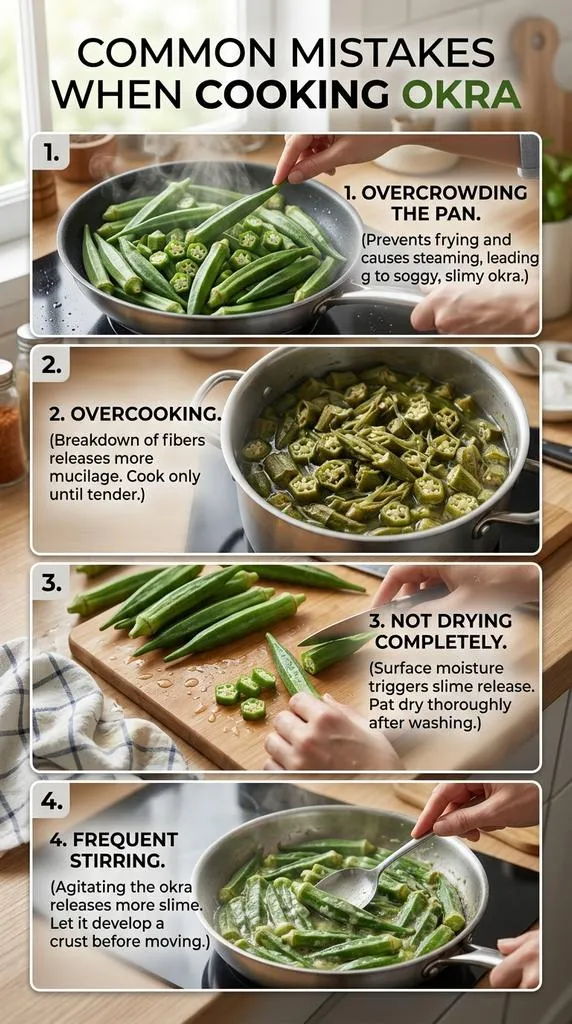
There are pitfalls, so many, when cooking okra that novice cooks may find themselves with anything but cuisine élite. Learn about these key mistakes and you’ll elevate your cooking experience dramatically, and enjoy this special vegetable to the max! Here, some frequent mistakes to avoid when preparing okra.
Choosing the Wrong Okra
An initial step in the cooking of okra is to select the appropriate pods. Even small slip-ups tend to come from selecting okra that’s too large or aged. Look for small, tender pods less than four inches in length. Larger okra pods can be fibrous and unpleasantly textured. Note: Fresh okra should be bright green with a sturdy feel and free of blemishes.
Neglecting to Wash Properly
Okra can be dirty or gritty, particularly if fresh from the farm. If you do not wash your okra properly, your dish will be ruined. Be sure to rinse the pods under cool running water and gently scrub them with your hands or a soft brush. This no-fail step guarantees your meal is clean plus safe to consume.
Cooking Without Preparation
Many cooks simply dump raw okra in their recipes with no prep first, which can produce unwelcome textures. For best results, it’s helpful to cut the okra into rounds or pieces based on what your recipe needs.) This way of prepping okra aids in more even cooking and allows you to have greater control over its final texture.
Overcrowding the Pan
When frying or sautéing okra, avoid crowding the pan so it steams instead of browns. This lessens the desired crispy texture of the okra. If you must use multiple pods, cook in batches instead to ensure that each pod has room for its ingredients to cook evenly.
Cooking at Too High a Temperature
People generally think that cooking hotter means cooking faster, but this is false for okra. Cooking dishes at too high a temperature can result in outsides that are burnt and insides that are raw. Get the cooking heat to medium to medium-high instead. This trick will yield a tender interior with a crispy crust.
Overcooking Okra
Okra cooks fairly quickly. Overcooking is a common complaint that leads to sliminess. Watch your cooking times closely; you should only need to sauté or fry for about 5-10 minutes. If you’re boiling, stick to a maximum 8 minutes for the best taste and texture.
Ignoring the Marginal Sliminess
Okra contains natural compounds that make it slimy when cooked. People sometimes shy away from it for this reason, but it’s a natural characteristic of this vegetable. If Sliminess is an Issue, Here are a Few Tips:
- Cook it with acids like lemon juice or vinegar.
- Do not wash the okra for too long before cooking and try to avoid excessive stirring while cooking.
- Add okra to recipes that include other ingredients with a strong flavor to balance any undesirable texture.
Not Emphasizing Seasoning
Okra by itself can be a bit bland. To enhance its natural flavors, be sure not to skip the seasoning! Salt, pepper and spices such as garlic and onion are your friends in improving the taste of it. You might also try marinating the okra before you cook it, for even more flavor.
Disregarding Variety in Cooking Methods
One of the delights of okra is its versatility. If you only fry okra, you’re missing out. Consider a mix of methods such as:
| Cooking Method | Characteristics |
|---|---|
| Frying | Crispy texture, great flavor |
| Sautéing | Quick cooking, retains more nutrients |
| Boiling | Smooth texture, good for soups |
| Baking | Healthy alternative, low oil use |
Different cooking methods allow you to find new favorites while still having healthful choices at hand. Also: Check out Joy of Cooking or Food Network for more cooking methods and recipes.
Remembering these five common mistakes will help you enjoy the full flavors and textures of what okra has to offer. It takes equipment, technique, and lots of TLC to turn out the perfect okra recipe — so prepare to embrace this quirky vegetable!
Exploring Different Cuisines That Use Okra
Okra is one funny little vegetable — it’s fun and versatile, appearing in a range of cuisines all over the world. Okra is renowned for its strange texture and ability to soak up flavors, so it has found a home in many homes. If you are ready to try some more creative ways of preparing the vegetable, here are just a few delicious cuisines that include it.
Southern and Soul Food
In the southern United States, okra is a key ingredient in staple dishes such as gumbo, where it acts to thicken and deepen the stew’s consistency. Fried okra, a classic side dish found in many Southern kitchens, is made with slices of breaded and deep-fried vegetables fried until crispy. Other favorites include:
- Okra and Tomatoes – A simple and comforting dish.
- Okra Soup – Typically made with spices, tomatoes, and other vegetables.
Both of these dishes showcase the rich flavors associated with Southern cooking, making them a must-try if you’re looking to indulge.
Indian Cuisine
Okra, or “bhindi” as it’s called in India, figures into innumerable Indian recipes. It is frequently stir-fried with spices as a side dish, called Bhindi Masala. Here are some more common Indian dishes:
- Stuffed Bhindi – Okra stuffed with a spicy mixture of spices and gram flour.
- Bhindi Raita – A refreshing yogurt-based dish that includes cooked okra.
These dishes highlight how okra can be infused with a variety of spices to create a delightful explosion of flavors.
Middle Eastern Influences
In Middle Eastern countries, it’s a savory addition to stews and rice dishes. One especially popular dish is Bamya, a hearty stew of tomatoes and meat. The okra is essential for texture and flavor. Other Middle Eastern dishes that use okra are:
- Okra Salad – Fresh okra lightly steamed and dressed with olive oil and lemon juice.
- Okra with Lamb – A savory combination that brings out the best in both ingredients.
These meals are perfect for those looking to explore the culinary vividness of the Middle East.
African Dishes
From Africa, the cradle of okra’s origin, countless traditional recipes contain this ingredient. In West Africa, for example, it’s commonly found in soups and stews such as Ogbono soup. Additionally, you may find:
- Okra Fritters – A spiced batter fried until golden brown.
- Jollof Rice with Okra – A classic West African dish that sometimes includes okra for added texture.
These recipes celebrate the unique flavors of African cooking and the importance of okra in its gastronomic heritage.
Asian Influences
Okra is eaten in various ways, especially among some Asian cuisines, like Thai and Vietnamese. In Thailand, okra is commonly cooked into curries; in Vietnamese cooking you might find it:
- Stir-fried Dishes – A quick and healthy way to enjoy okra with other vegetables.
- Vegetable Rolls – Fresh okra can be included in or served alongside rice paper rolls.
The incorporation of okra in these recipes adds a delightful crunch and vibrant color.
When you attempt to cook with okra from various cuisines, you can truly see how versatile this veggie is. From the warming down-home dishes of the Southern U.S. to such spicy pleasures as Indian curries, there’s something for every taste. There are a number of recipes on The Kitchn to help you explore okra further.
If you want to learn more about cooking techniques and international cuisines with okra, sites like Serious Eats will take your culinary adventures even further — introducing you both to traditional and more creative methods.
Okra can be found in diverse cuisines throughout the world, each one offering unique twists and preparations that highlight its versatility. From Southern comforts to Middle Eastern stews, it’s the many flavors of okra that guarantee it a beloved spot on tables around the world.
Conclusion
Okra can be a joy to cook because there are so many ways to use this versatile vegetable. This way you will get your okra dishes taste and texture just perfect. After learning more about the nutrition of okra — including its fiber, vitamins and antioxidants — it makes sense that adding this to your meals is a healthy idea.
Discovering creative recipes utilizing okra can lead you to take your everyday meals up a notch, whether that means making stews, stir-fries or even grilling this unusual vegetable. But there are pitfalls to avoid when cooking okra — which can easily be overcooked or prepared in a way that doesn’t maintain its flavor and texture.
Exploring the cuisines that use okra — from Southern to Indian to Middle Eastern dishes — helps you appreciate its cultural significance and versatility even more. Each cuisine takes a special approach to that glorious vegetable, encouraging you to expand your cooking vocabulary.
So as you start to dabble in cooking okra, keep in mind that experimentation and fun go hand in hand. Every dish you prepare feeds your body, but also brings you closer to a cooking tradition that extends around the world. So whether you’re a veteran cook or just getting started in the kitchen, okra calls on you to explore, taste and revel in its many offerings.