

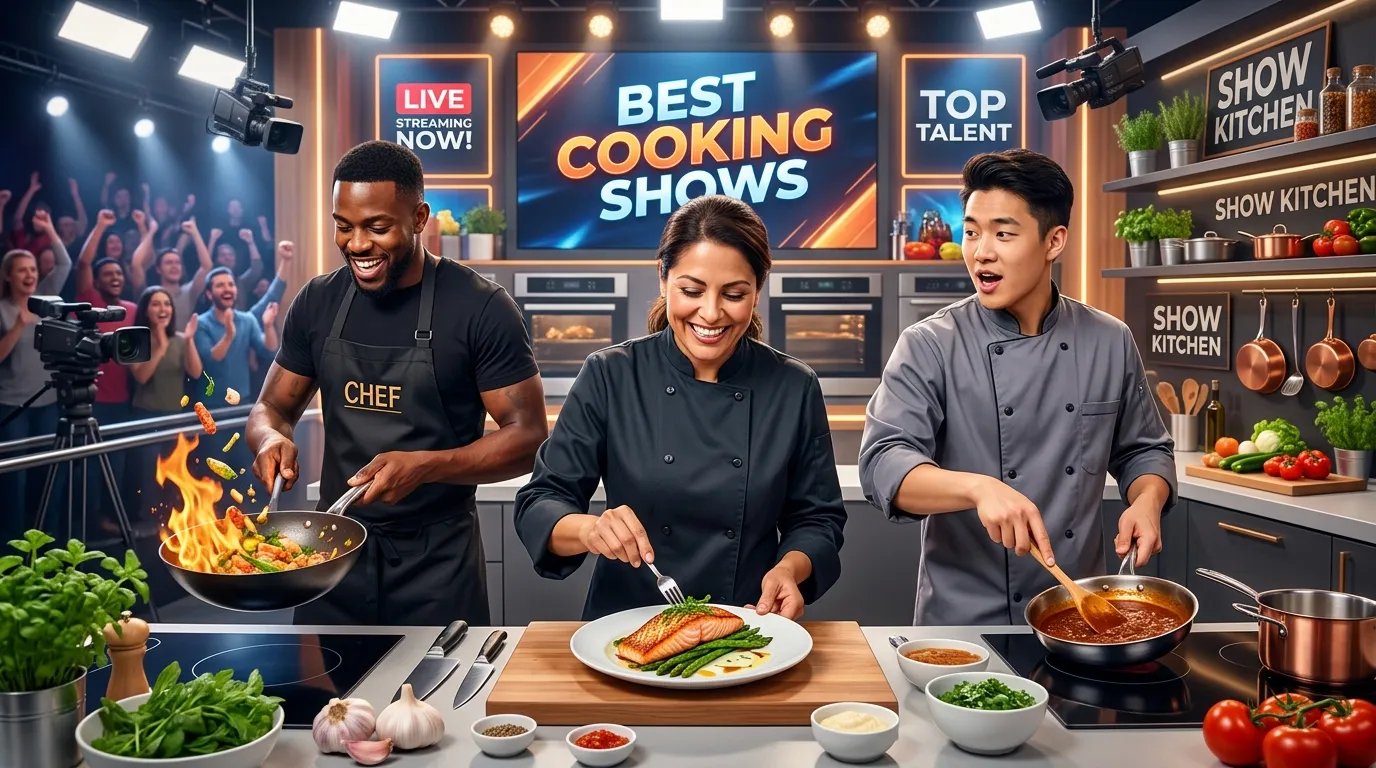

Dare We Say You Love to Cook but Need Inspiration? There are so many cooking shows out there right now that will help you level up your culinary skills, spark your creativity and add some levity to your kitchen. So, here are the 10 best cooking shows that can entertain and inspire aspiring chefs at your home.
So let’s get into some great cooking shows you could watch to perfect the art of cooking.
Best Cooking Shows for Cooks-in-Training
MasterChef — This competitive cooking show sets the stage for home cooks to aspire to be crowned MasterChef and see who excels. Contestants compete in different cooking contests, evaluated by professional chefs. Watching this show will teach you all the tricks and boost your confidence.
The Great British Bake Off — Perfect for a sweet tooth. The Great British Bake Off centres on the baking of sweet things and a spirit of creativity and collegiality among contestants. You’ll learn baking tips and feel motivated to try new recipes.
Chopped — Four chefs take on each other in timed rounds using mystery ingredients in this thrilling cooking competition. Chopped is a great lesson in how to think quickly and make something work on the fly with unusual ingredients.
Chef’s Table – If you like a little more artistry in your cooking, look to Chef’s Table. Exquisite series that dives into the journeys of world-class chefs and their cooking philosophies. It will lead you to think of cooking as not just a task but an art.
Rachel Ray’s 30 Minute Meals – Rachel Ray is all about providing quick and simplified recipes — if you’re pressed for time, then this cookbook Is great for making easy meals that don’t skimp on flavor. You will learn how to make great meals quickly, which is ideal for busy weeknights.
Why Cooking Shows Matter
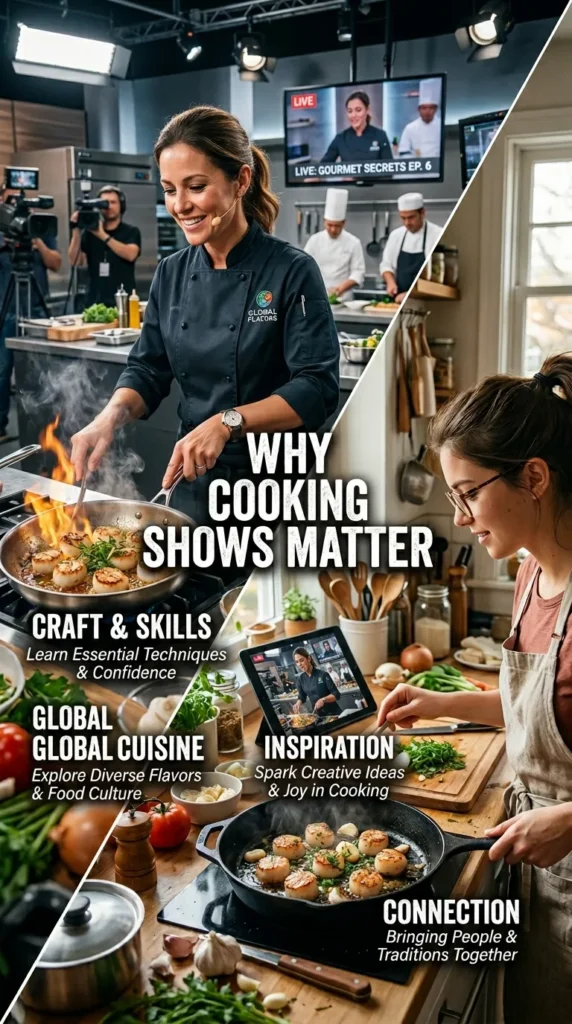
Cooking shows are not just about entertainment. Because they offer much to be learned from, such as in these ways:
Skill Set Expansion: Cooking shows regularly introduce you to various cooking techniques or styles, which you can incorporate into your culinary repertoire.
Recipe Inspiration: These shows offer so many recipes you can try in your own kitchen. You just never know what will become your favorite new dish.
Culinary Confidence: Watching others whip up great meals can inspire you to give cooking a go, step outside the box and get out of your comfort zone.
Entertainment: Cooking shows are informative as well as entertaining — ideal for spending time alone or with family and friends.
How to Get the Best Out of Cooking Shows
“To really get something out of these cooking shows, here’s what to do:
Take Notes: Always have a notebook on hand to write down recipe or technique ideas you want to try later.
Oil: Practice RegularlyOther ways to edago in learning …
Find a Community: Connect with others online; join subreddits or Facebook groups dedicated to these shows, share your attempts and ask for tips.
Additional Resources for Cooking Inspiration
To keep honing your culinary skills, check out These resources:
Food Network – Recipes, cooking tips and show guides galore.
AllRecipes — An easy-to-navigate site of crowd-sourced recipes and reviews.
Serious Eats – Excellent for narrative explorations (and discussions) of cooking and food science.
As you comb through these shows and resources, just remember that cooking is a journey. It’s all about trying things, making mistakes and having fun, so don’t be afraid to mess around a bit in the kitchen! You never know — you could be one show away from your next culinary masterpiece.
How Cooking Shows Influence Culinary Trends
ecipes but also inspiration that influences food preferences and dining habits. These shows can usher in trends for certain ingredients, cooking styles and even dining experiences that appeal to both amateurs and pros alike.
The way cooking shows shape culinary trends is primarily by popularizing certain ingredients. Shows like Food Network, for example often feature the latest superfoods and trendy seasonal produce, as well as uncommon flavor pairings. As the audience sees these chefs create colorful and tantalizing dishes, they want to seek out those same ingredients at their local grocery. This curiosity translates into sales of the ingredients, which is why retailers choose to have in demand items on the shelves that we may want to recreate within our own kitchens.
Cooking shows also show new cooking techniques and methods apart from the ingredients. With chefs sharing the newest sous-vide tricks or tips for the art of fermentation, viewers feel inspired to try it at home. These shows can achieve this by modernising orthodox culinary techniques, rendering them less esoteric and more attractive. An increase in interest for plant-based cooking, highlighted by shows like Chef’s Table: BBQ demonstrates that culinary trends are moving towards healthier and more sustainable eating practices.
Cultural cuisine is another strong influence of cooking shows. Many of the programs delve into global culinary traditions, and as they do so, background their audience on the diverse ingredients and cooking methods among different cultures. Nielsen pointing out that as viewers experience more international plates by watching television, visits to restaurants featuring the cuisines depicted only on screen lead to additional culinary explorations.
They play a critical role in setting trends too (see cooking competitions like Top Chef). Contestants frequently offer inventive spins on classic recipes, which inspires others to recreate or make variations on these ideas. The added element of competition brings excitement and engages audience, in turn driving culinary trends on social media. Although the guests are often posting on social media about their experience and recipes — including on Instagram, where they influence followers who might want to try to recreate dishes.
Embracing Sustainable Cooking
With growing awareness of the reach and consequences of food production, cooking shows have begun to source their narratives in sustainable practices and food sources. Numerous chefs extoll the virtues of using local produce and ethically sourced ingredients. This trend reflects a growing desire from consumers not only for sustainability, but also impacts the food industry at large by encouraging responsible dining choices.
How Cooking Show Trends Go Viral on Social Media
Cooking shows do not operate in a vacuum; they exist within a digital ecosystem where social media amplifies their footprint. Social media sites such as Instagram and TikTok give fans the chance to post their imitations of foods they see on screen. User-generated content on TikTok often sparks discussion of trending food, with some items garnering millions of views. Meanwhile, hashtags like #FoodTok and #HomeCooking give like-minded community members a way to connect — share the culinary creations they would’ve seen behind the screen of cooking shows before those trends infiltrated their home screens.
In addition, shows can inspire challenges on social media, such as the 30-minutes-or-less dish or the two-ingredient meal. (Making up challenges like this encourages viewers to participate, experiment and have fun cooking.)
As a result, cooking shows are an important piece of the puzzle in determining culinary trends. Via ingredient promotion, technique demonstrations, exposure to cultural cuisines and social media influence, these shows inspire generations of cooks.” Whether you are watching to get tips on how to pull together a dish, or just for fun, the influence of these cooking shows goes far beyond the kitchen.
As the fusion of entertainment and culinary arts continues to evolve, we should see an even stronger and more diverse influence from cooking shows over food trends. Food culture has a bright future ahead, and cooking programs are at the forefront.
All the Unseen Work That Goes Into a Cooking Show
Cooking shows capture the attention of viewers with delectable recipes, great visuals and even greater personalities. But what do these shows actually get right? However, there are many special ingredients behind the scenes that make cooking television work. Let’s deep dive into what makes a cooking show great.
Engaging Hosts
The host is usually the face of a show. A significant part of their allure is their charisma and personality. A good host has to do more than cook — they engage with the audience. They share their stories and relatable moments and create a place where you feel at home in your own kitchen. Think of favorite TV personalities such as Ina Garten or Jamie Oliver, who have honed this to a fine art.
High-Quality Production
Production quality can make or break a cooking show. Cameras were HD, lighting was done by a team of experts and sound design added to the experience. Production teams devote hours to planning shots, setting the scene and making sure every dish shines on screen. It is crucial to display the beauty of freshly made meals with this visual attraction. However, if you want to see great examples of high-quality production, look no further than Nailed It!.
Compelling Storylines
Every good cooking show is marked by dramatic narratives. Whether it’s a cooking competition, a travel-centric food odyssey or a personal story of gastronomic legacy, these narratives engage viewers emotionally. They want not only recipes, but also context — the background of a dish, yes, or the struggles and triumphs of the person making it. Series like Mind of a Chef are a gorgeous mix of cuisine and narrative.
Diverse Recipes and Techniques
Viewers love variety. What makes a successful cooking show covers a wide variety of cuisines, techniques and dietary needs. Not only does it keep things fresh and exciting, but it also caters to a wider audience. To reach more people, also include vegan, gluten-free, or international recipes. Shows like Chopped need to have different challenges, all while demonstrating new cooking techniques.
Interactive Elements
In this digital age, cooking shows are made interactive. Severals shows use social media to involve viewers by getting them to try out recipes and post pictures of their meals, or by take part in online cooking challenges. Conducting a live Q&A, or including a call-to-action makes it feel participatory for the audiences and enhances their experience of viewing your video.
Authenticity and Passion
Authenticity is key. Viewers connect with presenters who make it clear that they love cooking. When a chef is excited about something, that energy inspires viewers to try it too. Cook demonstrates how shows featuring home cooks or professionals discussing real-life experiences earn credibility and trust with audiences. Just check out the likes of BBC Food, or whatever there has been a genuine enthusiasm for when serving up such a broad range of chefs.
Building a Community
A successful cooking show fosters a community. With an audience who feels invested in what happens, and a host that responds to that audience. Some examples include: through social media platforms, dedicated forums, or cook-along events. Bringing together viewers united by a common love of cooking encourages collaboration, inspiration and friendship among foodies.
| Element | Description |
|---|---|
| Engaging Hosts | Charismatic individuals who resonate with viewers. |
| High-Quality Production | Well-staged setup and good cinematography. |
| Compelling Storylines | Stories that immerse viewers in the cooking process. |
| Diverse Recipes | Variety of cuisines and techniques that appeal to a wide audience. |
| Interactive Elements | Engagement through social media and viewer participation. |
| Authenticity | Genuine passion and personality that connect with the audience. |
| Building Community | Creating an engaged community that collaborates and interacts. |
All of this combined makes for an unmissable cooking show that captures our heart and inspires us to cook in the comforts of our home. Whether you’re a professional chef or an amateur, these are the shows that help you discover new recipes and techniques — and sometimes the joy of cooking itself.
The Role of Cultural Representation in Cooking Programs
Cooking programs have become a significant part of our daily lives, not just for culinary enthusiasts but also for those seeking entertainment and cultural insights. As the popularity of these shows grows, so does the importance of cultural representation in the kitchen. The way different cultures portray their culinary traditions is vital for showcasing diversity and fostering understanding.
In cooking shows, you often find hosts from diverse backgrounds sharing their unique approaches to food. This diversity enriches viewers’ experiences and provides a platform for underrepresented cultures. When you watch a show featuring an Afghan chef preparing traditional dishes, for instance, you not only learn about their recipes but also immerse yourself in their story and culture.
One significant impact of cultural representation in cooking programs is the promotion of inclusivity. Here are a few ways cultural representation plays a role:
- Education: Cooking shows are a powerful medium for education. They inform audiences about various ingredients, techniques, and culinary traditions that might otherwise remain unknown. This learning greatly broadens viewers’ perspectives.
- Breaking Stereotypes: Many cooking shows challenge preconceived notions about certain cuisines or cultures. For instance, showcasing authentic Mexican cooking, as done in shows like “Mexico – One Plate at a Time”, allows audiences to see the richness beyond the typical tacos and nachos often associated with Mexican food.
- Community Building: These programs often create a sense of community among viewers. People from similar backgrounds can connect with the shows, while those from different cultures can foster a greater appreciation and respect.
Another critical aspect is how cultural representation in these shows impacts the industry itself. Diverse hosts and chefs are vital for widening the appeal of culinary programming. Shows featuring a mix of cultures can attract a larger audience, interested in various cooking styles and traditions. Programs like “Top Chef” and “Chef’s Table” not only highlight established chefs but also uplift emerging talents from diverse backgrounds.
Moreover, many people view cooking as an art form, similar to painting or music. Just like artists portray their cultural backgrounds and experiences through their works, chefs do the same with food. By sharing personal stories related to recipes, chefs can engage the audience on a deeper emotional level. For instance, when Southern chefs discuss their ancestry through dishes, they convey a narrative that connects food to heritage and identity.
The integration of cultural representation in cooking programs is not without challenges. Some shows may fall prey to cultural appropriation, which occurs when individuals or companies adopt elements of one culture without understanding or respecting the original context. This misuse may lead to misrepresentation and dilute the richness of the culture being showcased. It’s crucial for producers to engage with cultural experts and communities when creating content, ensuring authenticity and respect.
Here is a simple table that illustrates some of the best cooking shows known for their cultural representation:
| Show Title | Host/Chef | Culture Represented |
|---|---|---|
| Aarti Party | Aarti Sequeira | Indian |
| The Kitchen | Various | American |
| Eddie Jackson’s BBQ on the Beach | Eddie Jackson | Southern American |
| Southern at Heart | Jeff Mauro | Southern American |
Ultimately, cultural representation in cooking programs goes beyond just recipes. It brings an understanding of traditions, fosters empathy, and connects people through shared experiences. As viewers become more aware of the rich tapestry of global cuisines, the cooking show landscape will continue to evolve, reflecting the world’s diversity. Fostering these connections drives home the point that food is not only about sustenance but also about community, culture, and identity.
Tips for Learning Cooking Skills from Television Shows
Learning cooking skills from television shows can be an enjoyable and effective way to enhance your culinary abilities. With a plethora of cooking programs available, they serve as both entertainment and a source of education. Here are some tips to help you maximize your learning from these shows.
Choose the Right Shows
Selecting the right cooking shows is crucial for effective learning. Some shows focus on techniques, while others emphasize specific types of cuisine. Here are a few popular shows to consider:
- Chopped – A competitive show that challenges chefs to utilize given ingredients.
- MasterChef – Home cooks compete for the title, offering insights into various cooking techniques.
- The Great British Bake Off – A baking competition that showcases baking skills, techniques, and recipes.
Engage with the Content
To truly benefit from cooking shows, it’s important to engage actively. Here are some ways to do that:
- Take Notes: Write down key techniques or tips you find helpful.
- Follow Along: Cook the recipes as you watch. This helps reinforce what you learn.
- Ask Questions: Engaging with online communities can provide a deeper understanding. Forums like Reddit Cooking allow you to share experiences and seek advice.
Practice, Practice, Practice
Watching cooking shows is just the first step. To develop your skills, practice is essential. Here are some effective strategies:
- Recreate Recipes: Choose recipes from your favorite shows and try to make them at home.
- Experiment: Use the techniques you’ve learned to create your own dishes.
- Record Your Progress: Keep track of your successes and areas for improvement.
Utilize Social Media
Social media platforms are excellent resources for learning cooking skills from television shows. Follow chefs or cooking shows on Instagram, Facebook, and TikTok. This way, you can find tips, behind-the-scenes content, and recipe ideas. Engaging with the community can also lead to new ideas and inspiration.
Consider Cooking Competitions
If you find yourself inspired after watching cooking competitions, consider participating in local cooking contests. These events not only motivate you to refine your skills but also allow you to gather feedback from judges and peers, elevating your cooking game.
Invest in Good Equipment
Having the right tools can make a significant difference in your cooking journey. You don’t need every gadget, but investing in some essential tools can improve your cooking experience:
- High-quality chef’s knife
- Cutting board
- Cast iron skillet or non-stick pan
- Measuring cups and spoons
Learn the Science Behind Cooking
Understanding the basic science of cooking can enhance your skills. Shows like America’s Test Kitchen explain why certain techniques work. Learning about flavor combinations, heat transfer, and ingredient interactions can make you a more intuitive cook.
Watch with Friends or Family
Cooking can be a social experience. Invite friends or family to watch cooking shows with you. This not only makes it more fun but also enables you to share experiences and learn from one another. After the episodes, plan a cooking session where everyone can contribute a dish and enjoy the time spent together.
Stay Updated
Cooking trends evolve over time. Stay updated by watching new episodes and following culinary news websites. This way, you can incorporate the latest trends and techniques into your cooking repertoire.
By following these tips, you can make the most out of cooking shows and become a more skilled and confident chef. Embrace the journey of learning, and enjoy every moment of cooking!
Conclusion
Cooking shows have become a vital part of culinary culture, offering both entertainment and education to home chefs around the world. They inspire enthusiasts to explore their own kitchens, incorporating new techniques and flavors that reflect the diverse array of culinary traditions. As we’ve seen, these shows not only highlight the latest gastronomic trends but also play a crucial role in shaping our understanding of global cuisines. By featuring various cultural representations, they foster appreciation for the rich tapestry of food traditions, helping to break down barriers and celebrate diversity.
Behind the scenes, the success of these shows hinges on engaging storytelling, charismatic hosts, and high production values, all of which draw viewers in and keep them coming back for more. Whether you’re a novice cook or someone who has been in the kitchen for years, there are valuable lessons to be learned from watching. The tips discussed throughout this article provide practical ways to harness the power of these programs to refine your own cooking skills.
So, why not dive into the world of cooking shows? With a plethora of options available, you’re bound to find programs that resonate with your tastes while offering new insights into the art of cooking. Whether it’s mastering a classic dish or experimenting with a bold new flavor, these shows can empower you to create memorable meals and bring excitement back into your cooking routine. Embrace the adventure and let these shows guide you as you explore the culinary landscape from the comfort of your home.