


Halibut can be prepared for delicious and maybe healthier meals you and your family will love. This lovely, mild-flavored fish is versatile, and it can be cooked in a number of delectable ways. Grilling, baking, pan-searing and broiling — each technique highlights halibut’s best features so that its natural flavors take center stage. Here are some delicious ways to prepare halibut that you can try at home.
Grilling Halibut
Grilling halibut gives it a smoky flavor and a wonderful char. To grill halibut:
- Preheat your grill to medium-high heat.
- Brush the fish with olive oil and season with salt, pepper, and your favorite herbs.
- Place the halibut on the grill. Cook for about 4-5 minutes on each side, depending on thickness. The fish should be opaque and flake easily.
Grilled halibut pairs well with fresh lemon juice, giving it an excellent burst of flavor.
Baking Halibut
Baking is another effortless way to cook halibut while keeping it moist. This method is great for busy nights.
- Preheat your oven to 400°F (200°C).
- Place the halibut fillets in a baking dish. You can add herbs, garlic, and a splash of white wine or broth for added moisture.
- Bake for around 15-20 minutes, depending on thickness. Ensure the fish reaches an internal temperature of 145°F (63°C).
This method retains the fish’s natural juices and flavors, making it a tasty and healthy option.
Pan-Searing Halibut
Pan-searing provides a crispy exterior while keeping the inside tender and flaky. Here’s how to do it:
- Heat a skillet over medium-high heat and add oil.
- Season the halibut fillets with salt and pepper.
- Once the oil is hot, place the fish in the pan. Cook for around 4-5 minutes on one side until golden brown, then flip and cook for an additional 3-4 minutes.
For a burst of flavor, you can add a knob of butter and some fresh herbs during the last few minutes of cooking.
Broiling Halibut
Broiling is a fantastic way to achieve a crispy texture on the outside while keeping the inside juicy. Here’s a step-by-step guide:
- Preheat your broiler and place the oven rack about 6 inches from the heat source.
- Season halibut with salt, pepper, and any spices you prefer.
- Place the fish on a broiler-safe pan and broil for about 5-6 minutes on each side, depending on thickness.
This cooking method gives halibut a nice flavor while ensuring it cooks evenly.
Halibut Cooking Tips
To make the most of your halibut, keep these additional tips in mind:
- Always check for doneness using an instant-read thermometer; halibut should be 145°F (63°C).
- Marinating the fish for about 30 minutes can enhance its flavor significantly.
- Serve halibut with sides like roasted vegetables, quinoa, or a fresh salad for a well-rounded meal.
For more creative halibut recipes, check out Cooking Light and Food Network. These resources offer various cooking methods and flavor ideas to explore.
Trying out all the methods will help you find your favorite way to cook halibut. Whatever your cooking method — grill, bake, pan-sear or broil — halibut is sure to be a household favorite. We hope you have fun exploring this delicious and nutritious fish!
Nutritional Benefits of Halibut in Your Diet
One of the many things you may not know about halibut is that it is a highly nutritious fish that will add great variety to your diet. Not only is this flatfish rich in protein, but it also offers a variety of vitamins and minerals that contribute to excellent health. Here are a few key nutrition peeks of why halibut can be beneficial in your diet.
Protein Powerhouse
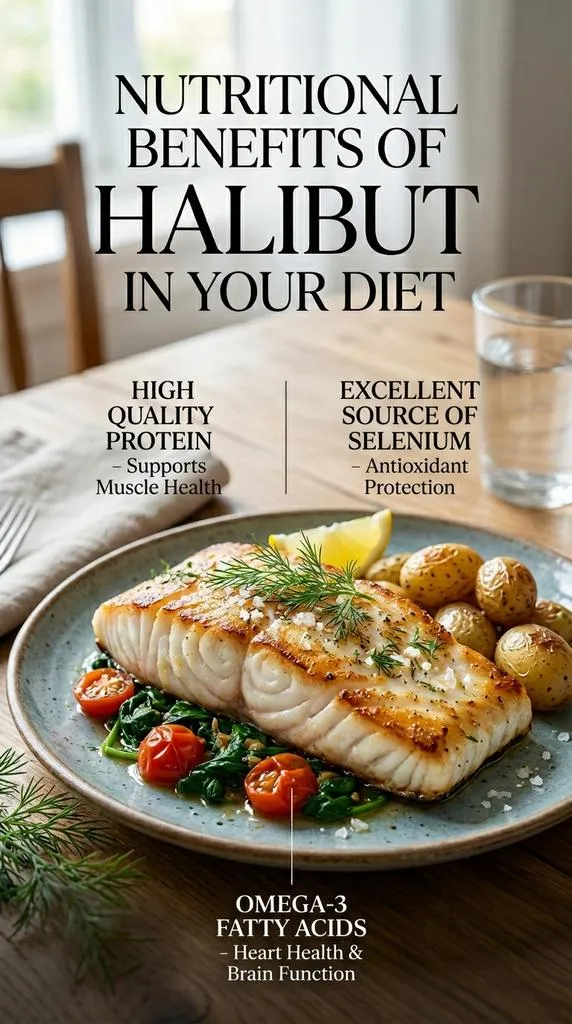
Halibut has one of the highest protein contents. A typical portion has about 22 grams of protein per 3-ounce serving. Protein is critical for muscle growth and repair, making halibut a great protein food source for anyone trying to preserve or gain intact skeletal muscle mass.
Rich in Omega-3 Fatty Acids
Halibut is a solid source of omega-3 fatty acids, specifically EPA and DHA. These fat burning fatty substances are recognized for their anti-inflammatory nature and supporting inner body health. Omega-3s can help lower blood pressure, lower triglycerides and may even reduce your risk of heart disease. Adding halibut to your meals is a delicious way to ensure you’re getting these essential fats.
Vitamins and Minerals Galore
Beyond protein and omega-3s, halibut is rich in several vitamins and minerals, including:
- Vitamin D: Supports bone health and immune function.
- Vitamin B12: Vital for nerve function and the production of DNA and red blood cells.
- Selenium: An antioxidant that helps protect your cells and may improve thyroid function.
- Potassium: Essential for maintaining fluid balance and proper muscle function.
Low in Calories and Fat
Halibut is an excellent option if you’re counting calories. It has about 140 calories and only 2 grams of fat per 3-ounce serving. This makes it perfect for anyone who wants to shed pounds or just live a healthy life without sacrificing taste.
Enhancing Your Diet
Halibut into your diet can be easy and enjoyable. Here are some ideas on how to prepare this fantastic fish:
- Grill: Brush with olive oil and season with your favorite herbs for a simple and delicious grilled halibut.
- Bake: Wrap halibut in parchment paper with vegetables and herbs, then bake for a healthy, low-mess meal.
- Pan-Seared: Cooking halibut in a hot skillet allows you to achieve a crispy exterior while keeping the fish moist inside.
Considerations When Choosing Halibut
Here are some options when you buy halibut, you can look for sustainable ones. Halibut populations can be impacted by overfishing, so choosing fish caught in responsible fisheries is key. The Monterey Bay Aquarium’s Seafood Watch has some excellent resources for making informed choices.
Serving Suggestions & Recipes
Halibut’s mild flavor allows it to pair well with various cuisines. Here are some recipes that highlight halibut:
- Halibut Tacos: Serve grilled halibut in corn tortillas with mango salsa for a refreshing meal.
- Halibut Chowder: A creamy soup featuring halibut, potatoes, and corn, perfect for chilly days.
- Halibut Salad: Flake cooked halibut over mixed greens with a citrus dressing for a light lunch or dinner option.
Nutritional Comparison
Here’s a table showcasing the key nutritional content of halibut compared to other popular fish:
| Fish Type | Calories (per 3 oz) | Protein (grams) | Omega-3 (grams) |
|---|---|---|---|
| Halibut | 140 | 22 | 0.5 |
| Salmon | 175 | 23 | 1.5 |
| Tilapia | 110 | 22 | 0.1 |
As you can see, halibut is a low-calorie, high-protein fish with good omega-3 fatty acid content and it is perfect for a healthy diet. Eating halibut in your meals combines an enjoyable dish with well-being promotion.
For more culinary inspiration and information about seafood, visit Seafood Nutrition Partnership.
Flavor Pairings: Best Ingredients to Use with Halibut
Halibut is a mild and flaky fish, providing perfect canvases for all sorts of flavors. Its bland flavor lets it complement many things, so chefs and joyful home cooks love it. Here are some flavor combinations to bring out the best in your halibut.
Herbs and Spices
Using fresh herbs and spices is a fantastic way to infuse flavor into halibut. Here are some of the best options:
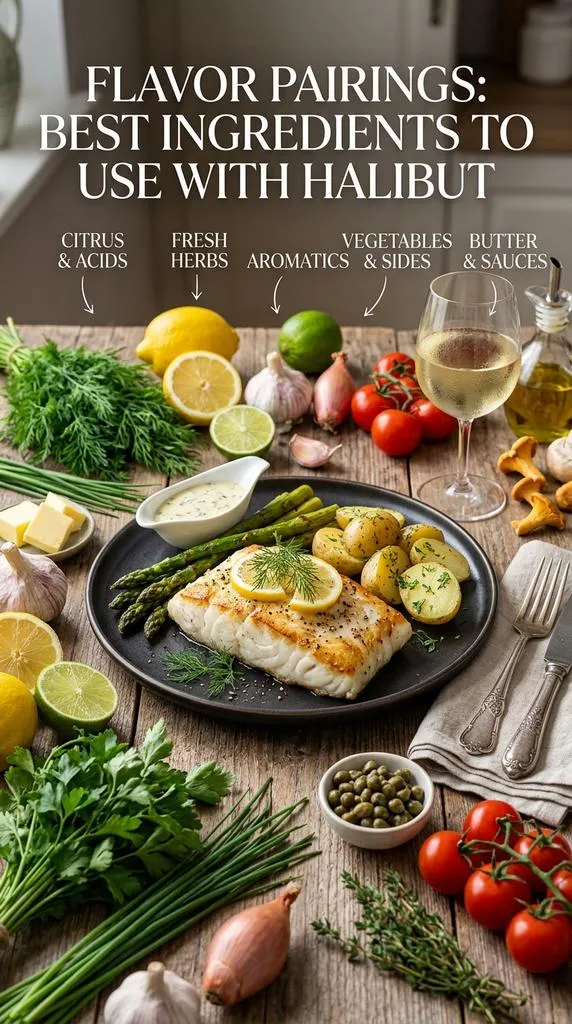
- Dill: This herb complements halibut beautifully, adding a fresh and slightly tangy note.
- Parsley: Its bright and fresh taste brings out the seafood flavor without overpowering it.
- Thyme: The earthy flavor of thyme pairs nicely, especially in roasted or baked dishes.
- Cilantro: Great in Mediterranean and Asian cuisines, cilantro adds a unique zing.
- Paprika: Adds a smoky depth, especially if you are grilling or roasting your fish.
Citrus and Acidity
Citrus fruits provide a zesty brightness that complements the richness of halibut. Consider these options:
- Lemon: A classic pairing, lemon juice or zest enhances the natural flavors of halibut.
- Lime: Perfect for a tropical twist, lime juice adds a refreshing quality.
- Orange: Gives a sweet contrast, especially when used in sauces or marinades.
- Vinegar: Balsamic or apple cider vinegar can add a tangy kick when used in dressings.
Fruits and Nut Components
Fruits can add sweetness, while nuts provide crunch and richness. Explore these pairings:
- Tomatoes: Whether fresh or in a salsa, tomatoes add acidity and sweetness that lifts halibut.
- Mango: A sweet fruit that works well in salsa, giving halibut a tropical flair.
- Avocado: Smooth and creamy, avocado can balance the dish with richness.
- Nuts: Almonds or pine nuts can add a crunchy texture and toasty flavor when sprinkled on top.
Complementary Sauces and Marinades
The right sauce can take your halibut from ordinary to extraordinary. Here are several that work particularly well:
- Chimichurri: An herb-based sauce that brings a burst of freshness and flavor.
- Beurre Blanc: A classic French sauce that adds a rich and creamy touch.
- Soy sauce: Gives an umami flavor, perfect in marinades or glazes.
- Mustard glaze: A tangy option that complements the fish’s mild flavor well.
Vegetable Pairings
Serving halibut with vegetables can make for a balanced meal. Consider these options:
- Asparagus: Roasted or grilled, asparagus pairs beautifully with the flakiness of halibut.
- Spinach: Sautéed spinach with garlic can serve as a flavorful bed for your fish.
- Bell Peppers: Sweet and colorful, they can be added to salsas or roasted alongside halibut.
- Zucchini: Grilled or sautéed, this vegetable adds a nice contrast in texture.
When you’re thinking about how to prepare halibut, think about these flavor pairings. Not only do they add an extra depth of flavour, but they also make for stunning plates that everyone can enjoy. For more tips and recipes, check out resources such as The Kitchn or Food Network.
While these ingredients may seem limited at first glance, you can become inventive early and liven up your halibut dishes. These pairings will help you make it an unforgettable dish, whether you’re baking your halibut or grilling it, or pan-searing.
Common Mistakes to Avoid When Cooking Halibut
Preparing halibut can be a joy, but is not without its challenges. Even the most seasoned home cooks can falter in ways that yield less-than-desirable results. Knowing what you should not do can make a world of difference to your dish and allow your halibut to shine on the plate as both tasty and gorgeous.
Not Preparing the Halibut Properly
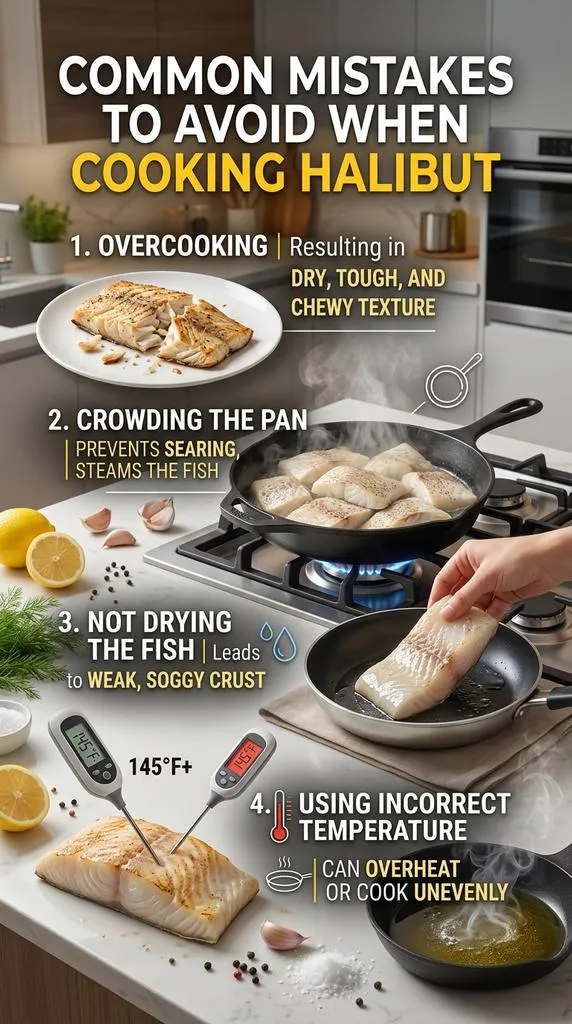
Begin with fresh halibut. Before cooking, it’s important to assess its texture and smell. It should smell mildly and be firm to the touch. If it’s slimy or you smell a strong fishy odor, don’t use it
Another common mistake is not removing the fish from the fridge before cooking, which prevents it from coming to room temperature. Cooking halibut from the fridge induces uneven cooking. For best results, do remove from the refrigerator for about 15-20 minutes before cooking.
Using The Wrong Cooking Method
Halibut is an adaptable fish that can be grilled, broiled, baked or pan-seared. But not every method is appropriate for this delicate fish. Something you often might do wrong is apply methods that could dry it out, like overcooking or grilling at too high a temperature. Here’s a quick rundown of various cooking methods:
| Cooking Method | Best Temperature (°F) |
|---|---|
| Grilling | 350-400 |
| Broiling | 450 |
| Baking | 375-400 |
| Pan-searing | 375 |
Overseasoning the Fish
Halibut has a delicate flavor that can be easily overwhelmed by heavy seasonings. Typical mistakes include overpowering it with spices or sauces. Instead, use simple seasonings that emphasize the inherent flavor of the fish. A little salt and pepper and a squeeze of lemon usually work wonders.
Ignoring Cooking Time
Timing is everything when it comes to cooking halibut. It cooks fast, and you can dry out the fish if you overcook it. As a general rule, plan to cook halibut for 10 minutes per inch of thickness. Here’s a quick reference:
- ½ inch thick: 5-7 minutes
- 1 inch thick: 10-12 minutes
- 1½ inch thick: 15-20 minutes
Always use a meat thermometer to check doneness. The internal temperature should reach 145°F when fully cooked.
Neglecting the Resting Time
Rest the halibut briefly after cooking, before serving. This process lets the juices redistribute and guarantees a moist, tender nibble. If you cut into it immediately, the juices will run out, resulting in a drier piece of fish.
Choosing the Wrong Side Dishes
Those side dishes can take a halibut dinner quite far. But one mistake many people make is picking sides that are too rich or heavy. Light, bright flavors are ideal. Consider options like:
- Grilled vegetables
- Quinoa or brown rice
- Fresh salads with citrus vinaigrettes
These complementary sides will let the halibut shine while adding nourishing elements to your meal.
Not Practicing Proper Kitchen Hygiene
Another great tip is to ensure a safe cooking environment. One common error is neglecting to wash your hands, any utensils or surfaces after handling raw fish. It can cause foodborne illnesses through cross-contamination. Always observe food safety guidelines when preparing any fish or shellfish.
For more recipes and tips on cooking halibut, you can visit Seafood Watch or check out cooking tutorials at AllRecipes.
Avoiding these typical mistakes — and you can get halibut that tastes terrific but also looks terrific. Remember, cooking is about experimentation and learning from failures so don’t hesitate to experiment with different techniques and flavours!
Creative Halibut Recipes to Impress Your Guests
Halibut is a delicious fish that will round out any dining experience. This submission, which is employment focused, was a great find for the home cook wanting to wow your guests as you search for creative halibut recipes. Scroll for some tried and tested creative ways to cook halibut that will impress friends and family.
1. Grilled Halibut Tacos
Celebrate the vibrant flavors of summer with grilled halibut tacos. This dish combines fresh ingredients with a smoky taste that your guests will love.
- Ingredients:
- 1 pound halibut fillets
- 1 tsp chili powder
- 1 tsp cumin
- Salt and pepper to taste
- 8 corn tortillas
- 1 cup shredded cabbage
- Fresh cilantro, chopped
- Lime wedges for serving
- Instructions:
- Preheat your grill to medium-high heat.
- Season halibut fillets with chili powder, cumin, salt, and pepper.
- Grill for about 4-5 minutes on each side until the fish is cooked through.
- Warm the corn tortillas on the grill.
- Assemble tacos with grilled halibut, shredded cabbage, and cilantro.
- Squeeze lime juice over the top and serve immediately.
2. Baked Halibut with Lemon and Herbs
This baked halibut recipe is simple yet flavorful, making it a perfect dish for a dinner party. The combination of lemon and fresh herbs brings out the natural taste of the fish.
- Ingredients:
- 1 pound halibut fillets
- 2 tablespoons olive oil
- Juice of 1 lemon
- 1 tbsp fresh dill, chopped
- 1 tbsp fresh parsley, chopped
- Salt and pepper to taste
- Instructions:
- Preheat your oven to 375°F (190°C).
- In a baking dish, sprinkle halibut with salt, pepper, and fresh herbs.
- Drizzle with olive oil and lemon juice.
- Bake for 15-20 minutes until the fish flakes easily with a fork.
3. Halibut Cakes
These halibut cakes are a fantastic appetizer that showcases the fish in a new and exciting way. They are crispy on the outside and tender on the inside.
- Ingredients:
- 1 pound cooked halibut, flaked
- 1/2 cup breadcrumbs
- 1/4 cup mayonnaise
- 1 egg, beaten
- 1 tsp Old Bay seasoning
- 2 green onions, chopped
- Oil for frying
- Instructions:
- In a bowl, mix flaked halibut, breadcrumbs, mayonnaise, beaten egg, Old Bay seasoning, and green onions.
- Form the mixture into small patties.
- Heat oil in a skillet over medium heat and fry the cakes for about 3-4 minutes per side until golden brown.
- Serve with a tangy dipping sauce.
4. Halibut En Papillote
Cooking halibut en papillote offers a dramatic presentation that’s bound to impress. The fish steams in its own juices, keeping it moist and flavorful.
- Ingredients:
- 1 pound halibut fillets
- 1 zucchini, thinly sliced
- 1 red bell pepper, sliced
- 1 lemon, sliced
- Salt and pepper to taste
- Parchment paper for wrapping
- Instructions:
- Preheat your oven to 400°F (200°C).
- Lay halibut fillet on the parchment paper and season with salt and pepper.
- Top with zucchini, bell pepper, and lemon slices.
- Fold the parchment to seal the fish inside.
- Bake for 20-25 minutes until the fish is cooked through.
These delicious halibut recipes can help tickle your taste bud and also be a great talking point at your table. If you’re in overwhelmed with seafood ideas, be sure to visit and check out Food Network Halibut Recipes for all sorts of dishes! Enjoy your culinary adventure!
For those looking to dive deeper into halibut cooking techniques, visit Serious Eats for expert tips and tricks that will help you perfect your dishes.
Conclusion
With the right methods in place, cooking halibut could be an exciting culinary experience. Grilled, baked or pan-seared, every cooking method highlights the delicate flavor and flaky texture of this tasty fish. On a Local Flavors note, Tyler Kord on how to integrate its delicious flesh into your mealsFor braising halibut. Integrating braised Read more
Halibut is also perfectly complemented by citrus and herbs and all manner of spices, which helps elevate the flavor profile here so that any dish you’re cooking shrimp in will be sure to outshine other casseroles. What you need to avoid, as you cook your halibut dinners, are the pitfalls that affect any light-bodied fish — overcooking it or seasoning it too strongly for its delicate flavor to hold up. Instead, strike balance to allow halibut to shine.
By exploring some creative halibut recipes, you can impress your guests and take your dining experience up a notch. Whether you’re making a simple dish of grilled halibut with a mango salsa, or a more complex dish of halibut en papillote filled with seasonal vegetables, the versatility of this fish offers endless options.
Taking that culinary journey with halibut not only delights your taste buds but also provides much-needed nourishment for your body. When you find more ways and flavors and recipes to prepare your halibut, it becomes clear that cooking it isn’t just about the eating; it’s about making experiences together with loved ones around the table. So why not try out some halibut today — your taste buds will be grateful!